

Patients diagnosed with schizophrenia experience disproportionately high rates of untreated dental caries, aggressive periodontitis, and premature edentulism compared to the general population. This clinical disparity stems from an intricate convergence of severe psychiatric symptomatology, pharmacotherapy side effects, lifestyle disruptions, and pervasive institutional stigma within traditional healthcare environments. Effective dental management cannot rely on simplistic oral hygiene admonitions or rigid operational assumptions. Dental professionals must understand the neurobiological realities of psychotic disorders, the profound physiological consequences of long-term neuroleptic medications, and the behavioral adjustments necessary to establish a functional therapeutic alliance. Delivering ethical, humanized dental care to this population demands empathy anchored in rigorous pharmacological awareness and structured clinical protocols rather than paternalistic sympathy.
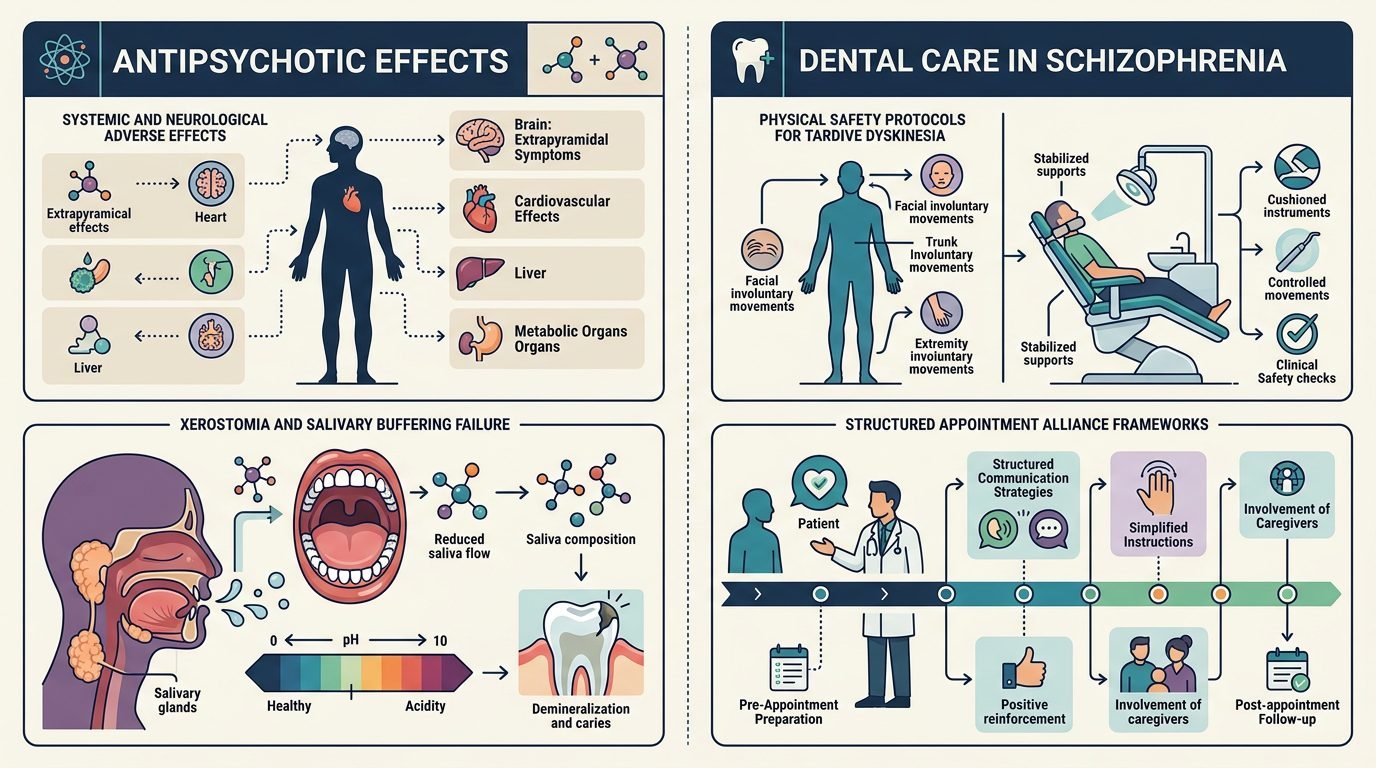
The neuropharmacology of both first-generation (typical) and second-generation (atypical) antipsychotics directly degrades oral physiological defenses. Phenothiazines like chlorpromazine, butyrophenones such as haloperidol, and atypical agents including clozapine, olanzapine, quetiapine, and risperidone exhibit potent anticholinergic, antiadrenergic, and antihistaminergic properties. The resulting blockade of muscarinic M3 receptors in salivary acinar cells causes pronounced xerostomia. Salivary hypofunction drastically reduces salivary buffering capacity, neutralizes bicarbonate concentration, and eliminates critical antimicrobial proteins such as secretory immunoglobulin A and lysozyme. In this compromised oral environment, acidic dietary intake and cariogenic biofilms cause accelerated enamel demineralization and rampant cervical decay. Clozapine introduces a paradoxical complication: severe nocturnal sialorrhea driven by muscarinic M4 agonism and impaired swallowing reflexes. Patients experience persistent choking risks, perioral maceration, angular cheilitis, and sleep disruption, while paradoxically suffering daytime xerostomia.
Motor side effects induced by dopaminergic blockade across the extrapyramidal motor pathways present immediate chairside operational challenges. Acute dystonic reactions, parkinsonian resting tremors, muscle rigidity, and akathisia (motor restlessness and the inability to remain seated) complicate diagnostic examination and delicate restorative procedures. Chronic neuroleptic therapy poses an even more formidable clinical barrier through the development of tardive dyskinesia. This condition manifests as involuntary, repetitive, choreoathetoid movements involving the tongue, facial musculature, and mandible. Rhythmic tongue thrusting, lip smacking, and grimacing make intraoral instrument stabilization hazardous. Unintentional sudden occlusal closure can shatter ceramic instruments, dislodge burs, or cause severe soft tissue lacerations. Clinicians must utilize padded mouth props, bite blocks secured with dental floss, and wide, stable finger rests on sound alveolar structures to mitigate unexpected involuntary movements. Removable dental prostheses frequently prove nonviable in patients with tardive dyskinesia due to constant functional instability, mucosal ulcerations, and potential aspiration hazards.
Negative symptoms of schizophrenia directly dictate daily self-care capabilities and appointment compliance. Avolition (lack of motivation), anhedonia, severe social withdrawal, and executive cognitive dysfunction impair a patient’s capacity to organize daily tooth brushing, sustain interdental cleaning, or prioritize elective dental appointments. When clinicians interpret missed appointments or plaque accumulation as willful non-compliance or moral failure, they reinforce healthcare avoidance and exacerbate systemic medical neglect. The clinical team must shift away from abstract, moralizing lectures toward concrete, low-effort preventive regimens. Prescription of high-concentration neutral sodium fluoride dentifrice (5000 ppm), application of topical fluoride varnishes during clinical recalls, and daily rinse protocols with alcohol-free 0.12 percent chlorhexidine digluconate or cetylpyridinium chloride mitigate biofilm pathogenicity without overwhelming the individual’s executive resources. In severe cases of avolition, mechanical electric toothbrushes equipped with wide ergonomic handles and automated timers reduce the manual dexterity and planning required for plaque removal.
Psychiatric symptoms also include cognitive disorganization, paranoia, and auditory hallucinations that directly distort the sensory experience of the dental operatory. Dental equipment produces high-frequency auditory stimuli, visual glare from operatory lighting, and vibration transmitted through the cranial bones. To a patient with persecutory delusions, intraoral instruments and localized sensory numbness from local anesthetics can trigger intense suspicion, panic, or defensive agitation. Preventing paranoid decompensation requires consistent, calm, and transparent communication. Clinicians should eliminate ambiguity by providing short, factual descriptions of each planned step before touching the patient. Inquiries should confirm comfort rather than interrogate personal compliance. Reassurance should be grounded in clinical reality. A clinician must never attempt to argue against, validate, or dismiss an active delusional belief. If a patient expresses paranoia regarding dental materials, the clinician must remain entirely neutral, validating the emotional distress while gently re-centering attention on immediate, consensual physical comfort.
Pharmacological interactions between dental therapeutics and psychotropic regimens demand vigilant chairside management. Epinephrine within local anesthetic formulations presents theoretical risks of tachycardia, exaggerated blood pressure spikes, or paradoxical vasodilation depending on the specific neuroleptic agent involved. In patients taking typical antipsychotics with alpha-adrenergic blocking properties (such as chlorpromazine), large intravascular doses of epinephrine can precipitate severe hypotension due to unopposed beta-adrenergic stimulation. Accordingly, local anesthesia should be administered cautiously, utilizing minimal volumes of epinephrine (maximum 0.04 mg per appointment, equivalent to two cartridges of 1:100,000 epinephrine) coupled with aspirating syringes. Alternative formulations like 3 percent mepivacaine plain or 4 percent prilocaine with felypressin provide safe solutions when adrenergic stimulation must be avoided entirely. Furthermore, central nervous system depressants, opioid analgesics, and sedatives must be prescribed with extreme conservatism due to profound synergistic respiratory depression when combined with neuroleptics, mood stabilizers, and sedating atypical antipsychotics. Clozapine therapy requires recent complete blood count monitoring to rule out drug-induced agranulocytosis, a rare but life-threatening complication that contraindicates invasive surgical interventions without hematologic clearance.
Clinical scheduling must reflect predictable organizational structures. Morning appointments are generally optimal, occurring before peak afternoon fatigue or cognitive exhaustion take toll on the patient’s coping mechanisms. Session durations should remain brief, preferably between thirty and forty-five minutes, to accommodate potential restlessness and akathisia without inducing muscular fatigue. Involving trusted family members, formal caregivers, or community psychiatric case workers fosters consistent transportation, medication tracking, and post-operative monitoring. However, the patient’s legal autonomy and personal dignity must always be preserved. Even when a legal guardian signs consent documentation, the clinician must communicate directly with the patient, respecting personal boundaries and explaining every intraoral procedure with dignity.
Restorative planning requires pragmatic durability and realistic maintenance goals. Complex multitooth fixed prosthodontics and extensive osseointegrated implant reconstructions frequently carry high failure rates if xerostomia, bruxism, and sporadic hygiene lapses persist. Clinicians should favor direct composite restorations, resin-modified glass ionomer cements, and silver diamine fluoride applications to halt active dentinal carious lesions quickly. Stainless steel crowns or simple indirect onlays provide coronal longevity when fine marginal hygiene cannot be guaranteed. Preserving a stable, functional, and pain-free natural dentition protects chewing function and facial aesthetics without creating overwhelming financial and psychological burdens. Regular recalls every three to four months provide essential clinical opportunities for plaque debridement, topical fluoride replenishment, and positive reinforcement.
In conclusion, delivering humanized dental care to individuals with schizophrenia requires replacing historical clinical reluctance with evidence-based medicine and empathic professionalism. By recognizing the pharmacological drivers of xerostomia, managing extrapyramidal motor disorders with appropriate mechanical adaptations, minimizing operational sensory triggers, and carefully monitoring systemic drug interactions, dental practitioners can dismantle healthcare barriers. Achieving oral stability restores masticatory efficiency, relieves chronic infection, and reinforces personal dignity for a vulnerable population deserving equitable healthcare access.