
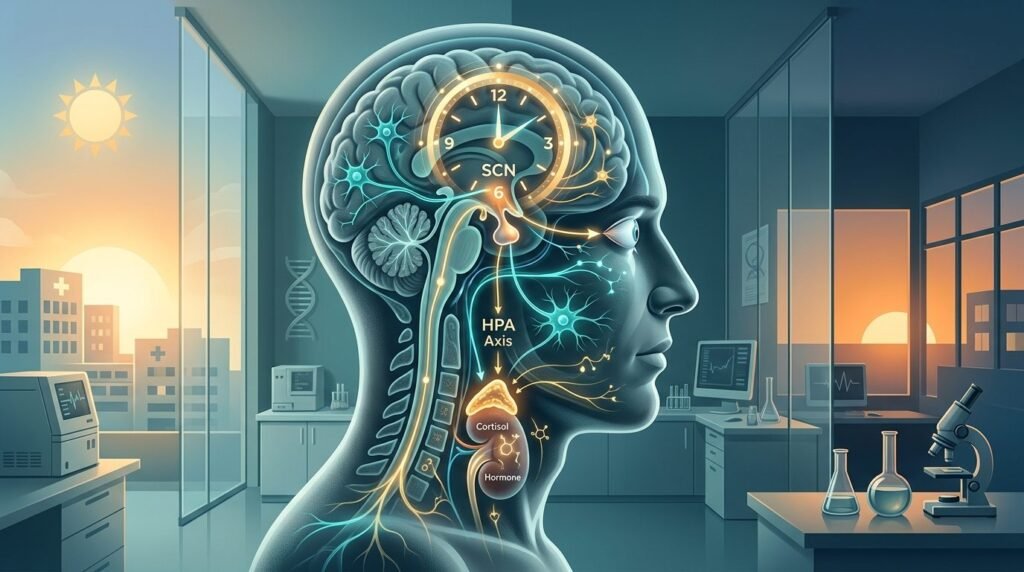
Pain tolerance is not a static psychological trait; it is an oscillating biochemical variable governed by the suprachiasmatic nucleus and the circadian secretion of adrenal glucocorticoids.
Clinicians schedule invasive dental procedures based on calendar openings, operating room availability, and personal convenience. This administrative habit ignores human chronobiology. Central nervous systems process nociception differently across diurnal cycles, with opioid peptides and liver cytochrome P450 kinetics fluctuating predictably. Treating an autonomic system in the morning produces markedly different hemodynamic curves than treating that same patient in the late afternoon.
The hypothalamic-pituitary-adrenal axis dictates vulnerability. Cortisol levels peak sharply thirty to forty-five minutes after awakening, a phenomenon known as the cortisol awakening response. In dental phobics, this baseline hypercortisolemia combines with anticipatory fear. By eight in the morning, their vascular beds are bathed in glucocorticoids and circulating catecholamines. Introducing exogenous epinephrine via local anesthesia on top of this endogenous peak routinely triggers sinus tachycardia, arterial hypertension, and diaphoresis before a single incision is made. The myocardium experiences unnecessary oxygen demand under this combined adrenergic barrage.
Circadian Fluctuation of Pain Thresholds and Endogenous Opioids
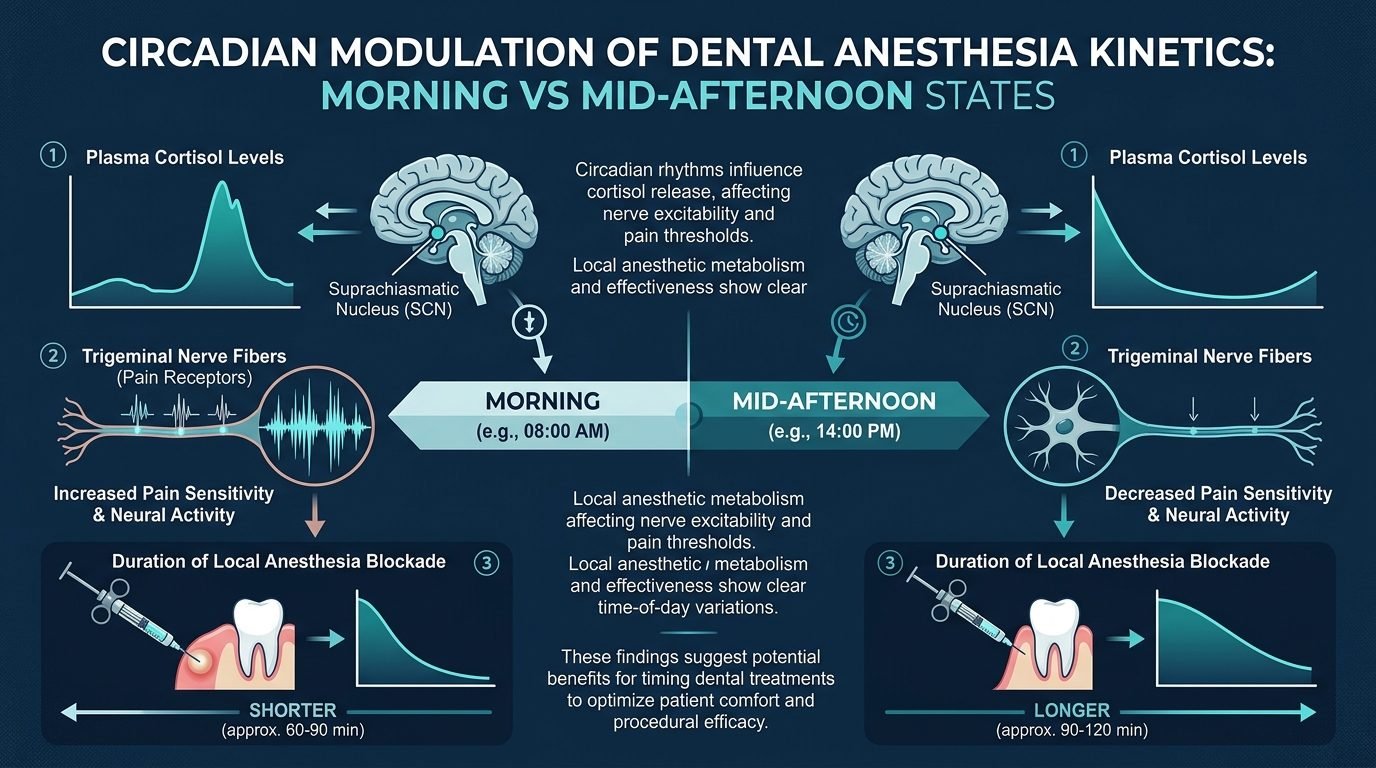
Sensitivity to painful stimuli peaks during the early morning hours. Quantitative sensory testing demonstrates that cutaneous and pulpal mechanical pain thresholds reach their biological nadir between 07:00 and 09:00. Somatosensory neurons exhibit higher resting membrane potentials during this window, lowering the depolarization threshold required to trigger action potentials in unmyelinated C fibers and thinly myelinated A-delta fibers. Sodium influx occurs with minimal provocation.
Endogenous analgesia follows the opposite trajectory across the light-dark cycle. Beta-endorphin and met-enkephalin binding affinities at mu-opioid receptors in the periaqueductal gray and spinal trigeminal nucleus strengthen progressively throughout the day. Central inhibition of ascending nociception reaches maximum biological efficiency in the mid-to-late afternoon, specifically between 14:00 and 16:00.
Patients feel less acute pain in the afternoon. A deep cavity excavation that triggers sharp defensive withdrawal at 08:30 often generates minimal discomfort when performed at 15:00 under identical anesthetic volume and tissue depth. The patient has not become braver. The subcortical gating machinery has simply activated its circadian descending analgesic cascade. Inhibitory interneurons discharge gamma-aminobutyric acid and glycine onto primary afferent terminals with greater potency during these afternoon hours, actively filtering nociceptive volleys before they reach conscious cortical perception.
Circadian Chrono-Parameters in Dental Practice:
- Cortisol Awakening Surge: Peaks 30-45 minutes post-awakening, amplifying cardiovascular reactivity.
- Pulpal Pain Sensitivity: Highest biological sensitivity between 07:00 and 09:00; lowest between 14:00 and 16:00.
- Lidocaine Duration Peak: Anesthetic blockade duration extends by up to 200% around 15:00 compared to early morning.
- Adverse Autonomic Events: Incidence of presyncope drops significantly during afternoon sessions.
Pharmacokinetics of Local Anesthetics Across the Diurnal Cycle
Local anesthetic duration is tied to the clock. Seminal chronopharmacological investigations by Reinberg and Smolensky showed that the duration of local anesthesia induced by lidocaine and mepivacaine varies dramatically depending on the hour of administration.
Anesthetic blockade lasts longest in the mid-afternoon. When two percent lidocaine with 1:100,000 epinephrine is infiltrated at 15:00, pulpal and soft-tissue anesthesia persists nearly twice as long as the exact same dose injected at 08:00.
Peripheral microvascular blood flow explains this variation. Mucosal capillary perfusion fluctuates rhythmically. In the early morning, local blood flow is brisk, accelerating the systemic washout of local anesthetic molecules from the submucosal depot into the venous system. By mid-afternoon, basal microvascular tone stabilizes, slowing systemic redistribution and maintaining high intraneural drug concentrations at sodium channel binding sites for prolonged intervals. The drug remains physically trapped near target nerve bundles for extended durations.
“Ignoring chronobiology turns anesthesia into a dosage lottery; injecting lidocaine at 15:00 delivers twice the effective clinical duration of an early morning infiltration.”
Hepatic metabolism also shifts. Cytochrome P450 enzyme systems in the liver, particularly CYP3A4 and CYP1A2, display rhythmic clearance curves. Morning clearance rates of amide anesthetics can cause faster drop-offs in systemic therapeutic levels while increasing vulnerability to peak plasma toxicity in patients with borderline cardiac or hepatic impairment. Protein binding ratios also fluctuate diurnally, altering the concentration of unbound, pharmacologically active anesthetic fractions circulating in plasma.
Hemodynamic Vulnerability and the Hypertensive Surge
Blood pressure follows a notorious morning surge. Upon standing, sympathetic tone rises rapidly to prevent orthostatic hypotension. Systemic vascular resistance increases, and blood platelet aggregability surges. Endothelial nitric oxide availability drops to diurnal lows during early waking hours, leaving resistance arterioles constricted.
Cardiovascular disasters follow this curve. Epidemiological records in emergency medicine consistently identify the period between 07:00 and 11:00 as the highest-risk window for myocardial infarction, ischemic stroke, and malignant arrhythmias. Subjecting a borderline hypertensive patient to an arduous full-mouth crown preparation or multiple surgical extractions during this morning surge invites hypertensive crises. The baroreceptor reflex operates with lower buffering capacity during these hours, allowing small stress-induced blood pressure spikes to escape homeostatic restraint.
Vasovagal syncope displays a similar diurnal pattern. Fasting morning patients who skip breakfast due to pre-appointment anxiety present to the operatory in mild hypoglycemia. In this metabolic state, sudden emotional shock triggers rapid vagal stimulation, precipitating profound bradycardia and cerebral hypoperfusion within minutes of entering the operatory.
Clinical Protocol for Chrono-Optimized Scheduling
Strategic appointment booking mitigates physiological risk without financial cost. Patients must be stratified based on neurovegetative stability and medical complexity. Clinicians must view the appointment book as a therapeutic instrument.
Highly phobic, anxious, and cardiac-compromised patients belong in afternoon slots. Scheduling these individuals between 14:00 and 16:30 capitalizes on falling baseline cortisol levels, peak endogenous endorphin release, and extended anesthetic efficiency. The heart rate remains lower. Panic spikes occur with diminished frequency. Surgical wounds inflicted in the afternoon also exhibit favorable early inflammatory profiles, as evening melatonin surges support initial tissue healing and leukocyte recruitment.
Pediatric cases and unconditioned children require morning timing for cognitive reasons. Unlike adults whose coping mechanisms depend on stable autonomic tone, children exhaust their executive prefrontal cortex reserves rapidly as the day progresses. A fatigued four-year-old child at 17:00 lacks the neurological stamina for behavioral desensitization. Morning appointments catch young pediatric patients before decision fatigue sets in.
The patient’s individual chronotype must be documented on their intake chart. Night-owls forced into 08:00 appointments exhibit acute sleep deprivation stress, rendering their central nervous systems hyperalgesic and uncooperative. Matching clinical intervention to biological rhythm is fundamental medical common sense.
Human physiology operates on cyclical time. Aligning invasive dental intervention with the biological clock lowers anesthetic consumption, stabilizes blood pressure, and reduces autonomic distress in the dental chair.
Scientific References and Supporting Literature
- Reinberg, A., & Smolensky, M. H. (1982). Circadian changes of drug disposition in man. Clinical Pharmacokinetics, 7(5), 401-420.
- Bruguerolle, B. (1986). Circadian phase-dependent pharmacokinetics of local anesthetics. Annual Review of Chronopharmacology, 2, 271-274.
- Smolensky, M. H., & Peppas, N. A. (2007). Chronobiology, drug delivery, and chronotherapeutics. Advanced Drug Delivery Reviews, 59(9-10), 828-851.
- Pöllmann, L. (1981). Circadian variation in tooth sensitivity and effects of local anesthesia. International Journal of Oral Surgery, 10(Suppl 1), 226-229.
- Clow, A., Thorn, L., Evans, P., & Hucklebridge, F. (2004). The awakening cortisol response: methodological issues and significance. Stress, 7(1), 29-37.
Leave a Reply