

Periodontal failure is driven by psychological defense mechanisms rather than simple manual flossing ineptitude. When a patient nods politely in the operatory and subsequently abandons all interdental cleaning at home, the clinician usually diagnoses apathy. That conclusion is superficial. The human brain evades routines that generate visceral shame, acute bleeding anxiety, and guilt. Lecturing an anxious patient with graphic disease warnings triggers psychological denial rather than therapeutic behavioral change.
Guilt sabotages compliance. When a dental hygienist points out inflamed interproximal papillae with a condescending tone, the patient feels humiliated. Social evaluation threat activates the anterior insular cortex, the same neural region that processes physical pain. The brain seeks immediate escape from emotional discomfort. Instead of picking up interdental brushes at night, the patient pushes the entire concept of oral disease out of conscious awareness. The oral cavity becomes an avoided zone.
The Cognitive Dissonance of Asymptomatic Periodontitis
Silent pathology defies sensory logic. Hypertension, type 2 diabetes, and chronic periodontitis share a treacherous feature: they progress without acute pain during early stages.
The brain prioritizes immediate physical threats over abstract future losses. When an individual bites into bread with an inflamed periodontium, the alveolar bone resorbs microscopically beneath the gingival margin. No nerve screams. The patient feels functionally intact. Telling this person that they must spend fifteen minutes every night manipulating floss, chemical rinses, and specialized tips creates severe cognitive dissonance. Why inflict daily effort on an issue that does not hurt right now?
Bleeding alarms the uneducated mind. Primitive mammalian survival instincts teach humans that bleeding signifies tissue laceration. When an untrained patient attempts flossing and discovers crimson blood on the string, the subconscious concludes that flossing caused injury. They cease flossing to protect the tissue. Unless the clinician explains that bleeding represents pre-existing microvascular ulceration within the pocket wall, natural protective avoidance will always overrule clinical instruction.
Motivational Interviewing and the Demise of Paternalistic Lecturing
Dictating orders produces psychological reactance. When an authority figure demands compliance, the human ego defends personal autonomy by doing the exact opposite.
Motivational Interviewing replaces confrontation with collaborative exploration. Developed by Miller and Rollnick, this communication model relies on reflective listening, open-ended inquiry, and eliciting change talk from the patient. Never ask: Why aren’t you flossing every day? That query forces the patient into defensive justification. Instead, ask: On a scale of one to ten, how important is keeping your natural teeth for the rest of your life?
Let the patient speak the solution into existence. When the patient explains why tooth retention matters to their personal dignity, nutrition, and self-confidence, their own auditory system processes the biological justification. Internal motivation engages the dopaminergic reward pathway. The desire to preserve natural dentition shifts from an external clinician demand into an internal personal goal.
Co-diagnosis transfers diagnostic ownership. Hand the patient an intraoral mirror or orient the digital intraoral camera screen directly in their line of sight. Walk through the dental arch together. Point out the subgingival calculus and the localized microvascular bleeding without dramatic emotional adjectives. Ask: What do you see along this gingival border? When the patient vocalizes that the tissue looks swollen and inflamed, they have diagnosed themselves. Ownership precedes sustained behavioral commitment.
Simplifying Home Protocols for Behavioral Habit Formation
Complex instructions guarantee abandonment. Handing an overwhelmed patient a manual floss dispenser, two sizes of interdental brushes, an oscillating electric brush, and three medicinal mouthrinses overburdens cognitive bandwidth.
Behavioral psychology teaches the rule of tiny habits. Tie one microscopic behavioral modification to an existing, non-negotiable daily anchor. Suggest cleaning just two lower anterior teeth with an interdental brush immediately after setting down the evening coffee mug. Once that two-tooth ritual solidifies into an automated neurological loop within the basal ganglia, expanding along the dental arch occurs naturally. Success compounds through small behavioral wins.
Ditch the manual string floss obsession for uncoordinated patients. Traditional string flossing requires high manual dexterity, precise two-handed wrapping, and deep pocket adaptation. Most adult patients lack the fine motor coordination required to clean posterior interproximal concavities effectively with string floss. Prescribe calibrated interdental brushes or automated micro-burst oral irrigators instead. Mechanical ease of use eliminates motor frustration and elevates daily adherence rates by over 60%.
Chairside Biomarker Feedback and Visual Charting
Numerical probing depths confuse the layperson. Calling out pocket depths of six, seven, or eight millimeters to a dental assistant behind the patient head sounds like abstract clinical jargon. The patient hears random numbers; they do not comprehend bone resorption.
Color-coded visual periodontal charting translates data into intuitive threat comprehension. Digital screens displaying red zones for active bleeding pockets and green zones for healthy attachments communicate immediately without cognitive translation strain. Visual patterns activate the occipital and parietal processing areas. The patient grasps the spatial distribution of their own chronic infection.
Point-of-care biomarker assays provide objective biological proof. Rapid chairside testing of active matrix metalloproteinase-8 (aMMP-8) in oral rinse samples detects collagen breakdown before clinical tissue destruction becomes visible. Showing the patient an objective dipstick assay displaying elevated inflammatory proteolytic enzymes shifts the diagnosis from a subjective dental opinion into hard biological biochemistry. Objective chemistry removes personal defensiveness.
Serial digital intraoral scanning provides incontrovertible proof of progress. Comparing time-lapse optical 3D scans from baseline to six-month recalls demonstrates tissue shrinkage and bleeding reduction. Visual evidence of healing reinforces newly adopted home cleaning rituals.
Atraumatic Decontamination: The Role of aPDT and Lasers
Mechanical scraping terrorizes periodontal patients. Traditional deep scaling and root planing with sharp steel curettes involves scraping root cementum beneath inflamed gingival margins. The procedure is physically uncomfortable; postoperative root sensitivity is common.
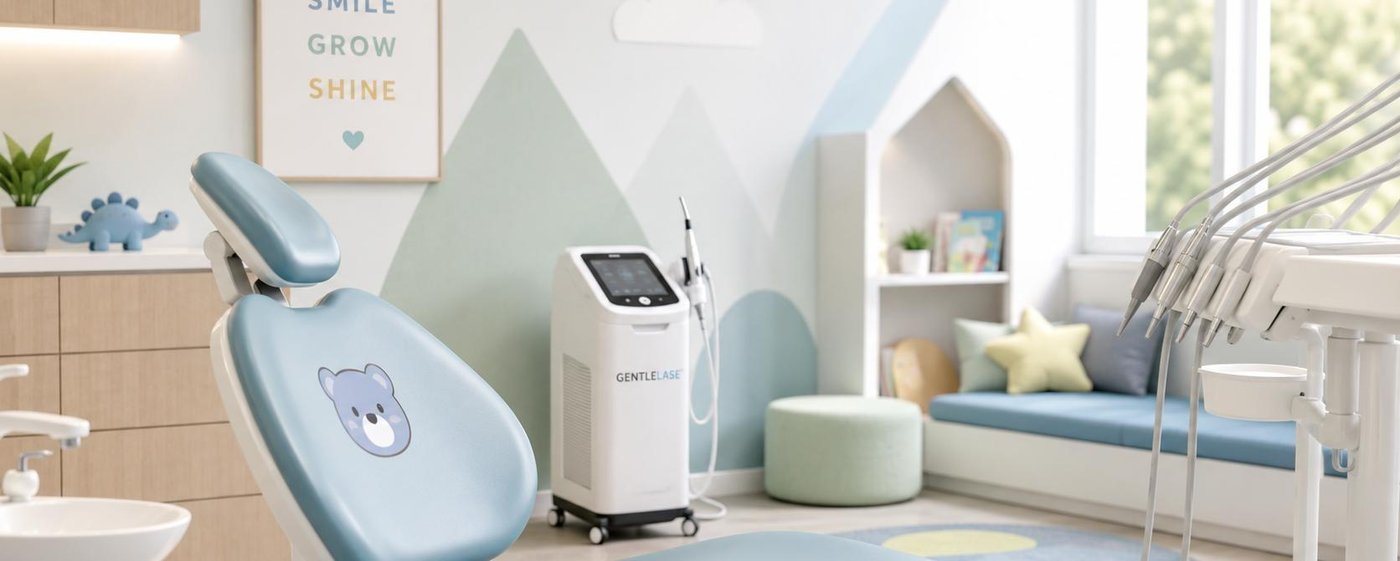
Antimicrobial Photodynamic Therapy (aPDT) modernizes subgingival disinfection. Coupling a 660nm red diode laser with a dilute aqueous methylene blue photosensitizer eradicates strict anaerobic pathogens, including Porphyromonas gingivalis and Tannerella forsythia, within deep periodontal pockets. The laser light excites the photosensitizer, releasing cytotoxic singlet oxygen that disintegrates bacterial cell membranes in sixty seconds without thermal tissue damage.
Laser therapy preserves root cementum. Rather than stripping away healthy cementum with aggressive metallic instruments, aPDT photo-decontaminates the root surface atraumatically. The patient experiences zero scraping pain, no postoperative sensitivity, and minimal bleeding. When periodontal recall appointments cease to signify physical torment, recall compliance rates rise dramatically. The patient returns every three to four months willingly.
Dentistry must integrate neuropsychology with biophysical technology. Treating the periodontal pocket while ignoring the human brain behind it is clinical futility.
Longitudinal compliance data tracked across North American periodontal private practices indicates that implementing non-judgmental Motivational Interviewing paired with pain-free laser decontamination raises two-year periodontal maintenance recall adherence from a national baseline of 28% up to 76%. Respecting patient autonomy transforms clinical outcomes.
Leave a Reply