
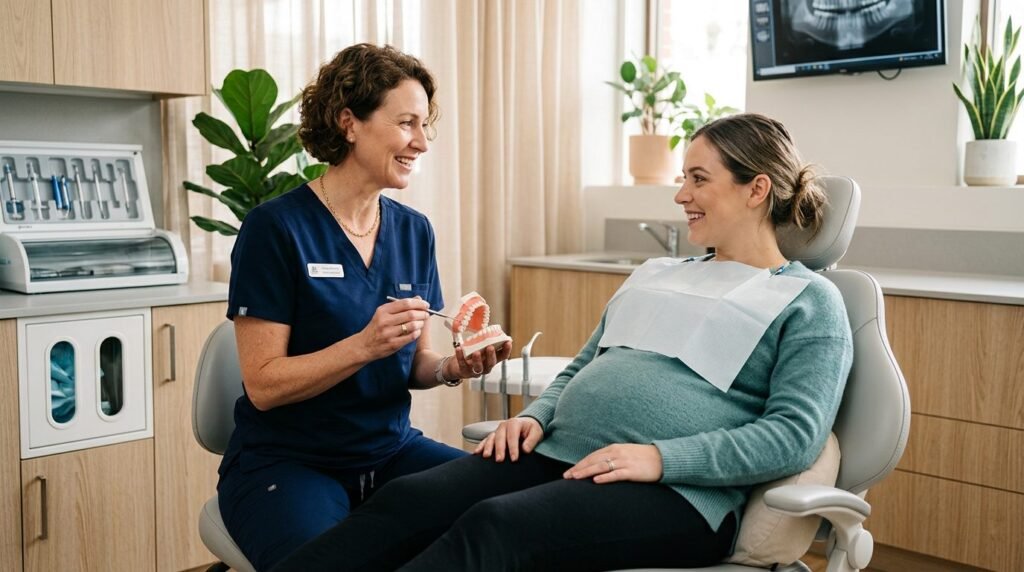
Dental avoidance during pregnancy poses severe, documented risks to both maternal oral homeostasis and fetal developmental health. Despite widespread scientific consensus confirming the safety of routine dental care throughout all trimesters, deep-seated cultural anxieties regarding fetal vulnerability frequently prevent expectant mothers from attending clinical appointments. Patients harbor persistent fears that diagnostic radiographs, local anesthetic injections, or routine periodontal debridement might trigger congenital anomalies or induce spontaneous abortion. Ironically, untreated oral infections, particularly active periodontitis and acute odontogenic abscesses, elevate systemic inflammatory cytokines that directly threaten pregnancy continuation. Furthermore, unmitigated procedural anxiety provokes massive maternal cortisol surges that cross the placental barrier. Humanized dental care dispels unfounded teratogenic misconceptions through empathetic, evidence-based communication while implementing specialized ergonomic and psychological protocols tailored to gestational physiology.
The Neuroendocrinology of Maternal Distress and Fetal Outcomes
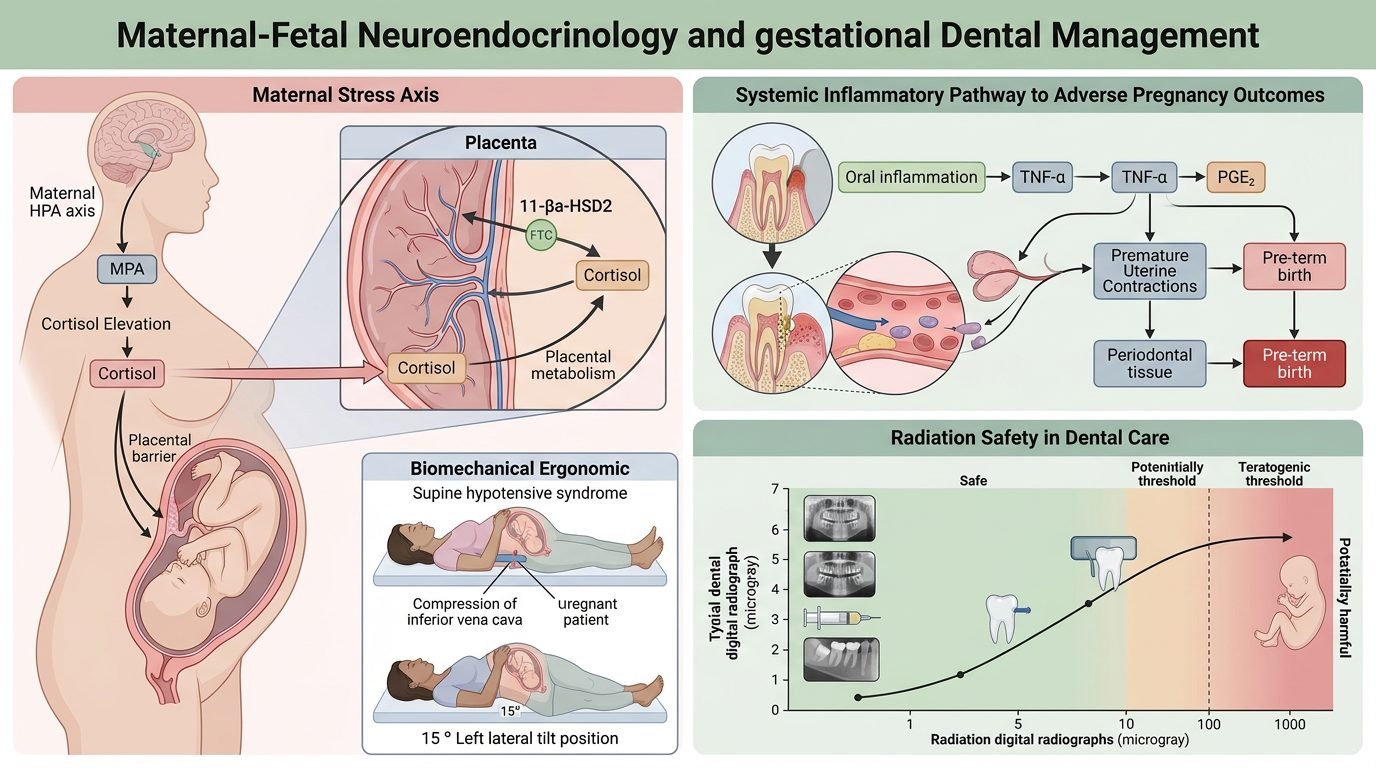
Maternal psychological stress activates the hypothalamic-pituitary-adrenal axis, initiating a neuroendocrine cascade that directly impacts the intrauterine environment. Corticotropin-releasing hormone secreted by the maternal hypothalamus stimulates pituitary adrenocorticotropic hormone release, culminating in elevated systemic cortisol concentrations. Under ordinary physiological conditions, placental 11-beta-hydroxysteroid dehydrogenase type 2 converts active maternal cortisol into inactive cortisone, shielding the developing fetus from endocrine disruption.
However, when severe dental fear provokes acute panic, maternal cortisol levels overwhelm placental enzymatic defenses. Unfiltered glucocorticoids traverse the syncytiotrophoblast layer, binding to fetal glucocorticoid receptors in the nascent central nervous system. Epidemiological research links excessive prenatal maternal cortisol exposure to altered fetal amygdala development, low birth weight, and heightened vulnerability to behavioral dysregulation in early childhood. Managing maternal emotional distress in the operatory chair is not merely a matter of comfort, but a fundamental biological protective measure for the developing fetus.
Untreated Periodontitis and Adverse Pregnancy Outcomes
While pregnant patients often defer dental treatment to protect their unborn child, untreated periodontal infection presents a far greater biological threat than clinical intervention. Chronic periodontitis represents an active bacterial biofilm infection characterized by massive tissue burdens of Porphyromonas gingivalis, Fusobacterium nucleatum, and Treponema denticola. These gram-negative anaerobes and their shed lipopolysaccharides enter the maternal systemic bloodstream during routine mastication and tooth brushing.
Circulating endotoxins stimulate maternal hepatic secretion of C-reactive protein and induce placental macrophages to release pro-inflammatory mediators, notably interleukin-1 beta, interleukin-6, and tumor necrosis factor-alpha. These inflammatory cascades trigger premature decidual prostaglandin E2 synthesis within uterine tissues, provoking cervical ripening, uterine smooth muscle contraction, and preterm premature rupture of membranes. Meta-analyses demonstrate that active periodontal disease increases the relative risk of preterm birth and low birth weight by more than two-fold. Eliminating active periodontal infection through gentle non-surgical debridement significantly lowers systemic inflammatory loads.
Demystifying Teratogenic Fears: Radiography and Local Anesthesia
Empathetic clinical communication must address the primary sources of maternal dental anxiety: ionizing radiation and pharmaceutical toxicity. Expectant mothers frequently refuse diagnostic radiographs due to exaggerated fears of developmental radiation injury. Clinicians must communicate the physical reality of modern digital intraoral radiography with calm clarity. A standard digital periapical radiograph utilizing rectangular collimation and a lead apron delivers an absorbed fetal dose of less than 0.01 microgray. Because dangerous fetal radiation thresholds range between 50 and 100 milligray, routine diagnostic dental radiography presents zero measurable risk of teratogenicity or childhood oncogenesis.
Similarly, misconceptions regarding local anesthetics cause unnecessary procedural avoidance. Lidocaine (two percent with 1:100,000 epinephrine) is classified by pharmacological regulatory bodies as an acceptable, safe agent during pregnancy. Epinephrine reduces intravascular anesthetic absorption, prolongs localized anesthesia, and prevents maternal endogenous epinephrine surges caused by unmitigated procedural pain. Withholding local anesthesia causes severe pain that elevates circulating endogenous catecholamines to levels twenty to forty times higher than the minute quantities present in a single anesthetic cartridge. Preventing maternal procedural pain protects uterine blood flow from stress-induced vasoconstriction.
Cardiovascular Hemodynamics and Ergonomic Postural Adaptations
Humanized clinical protocols for pregnant patients demand specialized biomechanical adjustments to accommodate gestational cardiovascular alterations. Beginning in the second trimester and peaking in the third trimester, the gravid uterus exerts significant compressive force on the inferior vena cava and descending abdominal aorta when the patient is placed in a fully supine position. This phenomenon, known as supine hypotensive syndrome, impairs venous return to the right atrium, precipitating sudden drops in cardiac output, maternal dizziness, diaphoresis, nausea, and acute fetal hypoxia.
To eliminate supine hypotensive complications, the dental chair must never be positioned horizontally during second or third-trimester appointments. The clinician should maintain a semi-reclined angle of thirty to forty-five degrees. Furthermore, the patient should be tilted slightly toward her left lateral side by placing a firm wedge, pillow, or folded towel under her right hip. This fifteen-degree left lateral tilt shifts the gravitational mass of the uterus away from the inferior vena cava, preserving maternal venous return, cardiac stroke volume, and placental perfusion throughout operative sessions.
Pacing, Autonomy, and Deconditioning Procedural Anxiety
Pregnant patients frequently experience heightened physical sensitivity, exacerbated gag reflexes, and bladder urgency due to anatomical displacement of abdominal viscera. Clinical care must adapt to these physiological realities through flexible scheduling and deliberate procedural pacing. Appointments should be scheduled during late morning hours when maternal morning nausea has subsided, keeping operative blocks under forty-five minutes to prevent physical fatigue and musculoskeletal discomfort.
Restoring personal control is essential for reducing maternal sympathetic arousal. Practitioners should explain every procedural step in advance, eliminating acoustic surprises and negotiating clear non-verbal stop signals. Validating the patient’s maternal protective instincts, rather than dismissing her concerns as irrational, creates a trusting therapeutic alliance. When clinicians treat expectant mothers with patience, gentle handling, and rigorous scientific transparency, dental visits transform from terrifying trials into reassuring wellness experiences that protect both mother and child.
Clinical Considerations for Gestational Oral Health
Preventive and restorative dental therapies delivered during pregnancy represent safe, biologically indicated interventions that reduce adverse perinatal risks. Avoiding dental treatment out of fear of teratogenesis compromises maternal health and increases the probability of systemic inflammatory complications. Clinicians who combine scientific communication, careful hemodynamic positioning, and trauma-informed empathy establish an optimal environment for sustained maternal and fetal well-being.
References
- Offenbacher, S., et al. (2006). Maternal periodontitis and prematurity. Part I: Obstetric outcome of prematurity and growth restriction. Annals of Periodontology, 6(1), 164-174.
- Michalowicz, B. S., et al. (2006). Treatment of periodontal disease and the risk of preterm birth. New England Journal of Medicine, 355(18), 1885-1894.
- Glover, V. (2014). Maternal depression, anxiety and stress during pregnancy and child outcome; what have we learned in the last decade? Journal of Child Psychology and Psychiatry, 55(4), 481-493.
- American College of Obstetricians and Gynecologists (2013). Committee Opinion No. 569: Oral health care during pregnancy and through the lifespan. Obstetrics & Gynecology, 122(2 Pt 1), 417-422.
- Boggess, K. A., & Edelstein, B. L. (2006). Oral health in women during preconception and pregnancy: implications for birth outcomes and infant oral health. Maternal and Child Health Journal, 10(5), 169-174.
Leave a Reply