

Agoraphobia coupled with severe panic disorder represents one of the most paralyzing behavioral barriers to comprehensive oral healthcare access. Characterized by an intense, irrational dread of entering environments where escape might prove difficult or help unavailable during an acute panic surge, agoraphobia frequently confines individuals to their domestic residences for months or years. In these housebound circumstances, routine preventive oral care ceases completely. As asymptomatic carious lesions progress into irreversible pulpitis, periapical abscesses, and advanced periodontal breakdown, individuals endure excruciating tooth pain in absolute isolation rather than risk venturing outdoors to a dental facility. When systemic pain finally forces emergency contact, traditional dental practices frequently fail them by demanding immediate physical attendance at busy, brightly lit, sensory-congested outpatient clinics. Expecting a housebound patient in acute panic to sit unassisted in a crowded reception room demonstrates profound clinical insensitivity and precipitates acute panic attacks, dissociative episodes, and immediate treatment abandonment. Structuring a humane and functional care pathway demands modern tele-triage, home-based interim evaluations, and graduated, patient-controlled in-office acclimatization protocols.
The neurobiology of panic disorder involves acute hyper-reactivity of the amygdala and dysregulation of ascending noradrenergic projections from the locus coeruleus. During an unanticipated panic paroxysm, massive autonomic sympathetic discharge triggers tachycardia, tachypnea, peripheral vasoconstriction, intense diaphoresis, vestibular dizziness, and catastrophic feelings of imminent suffocation or cardiovascular collapse. Within the traditional dental operatory, commonplace clinical procedures inadvertently replicate these panic triggers. Supine chair reclining induces mild respiratory restriction and stimulates vestibular sensations of falling. The placement of a rubber dam or bulky intraoral impression trays generates feelings of airway obstruction and entrapment. Furthermore, accidental intravascular deposition of epinephrine in local anesthetic solutions triggers sudden palpitations that patients instantly interpret as somatic proof of an impending heart attack. Understanding these neurovegetative reflexes is essential for redesigning clinical protocols.
Initial patient contact should begin remotely through secure, asynchronous tele-dentistry and video triage. For a housebound individual experiencing dental distress, communicating through a screen from the safety of their home reduces defensive fight-or-flight reflexes. During the remote tele-consultation, the clinician assesses the chief complaint, reviews systemic medical and psychiatric history, visually evaluates facial symmetry for cellulitis, and inspects intraoral lesions via high-resolution mobile photography. Crucially, this initial digital encounter establishes interpersonal rapport without imposing environmental terror. The dental team discusses the patient’s panic history, identifying specific phobic triggers (such as closed doors, dental odors, sensory confinement, or bright lights) and negotiating personalized accommodations. If pharmacological management is warranted to manage acute odontogenic infection or unremitting nocturnal pain, targeted antibiotic therapy and non-sedating analgesics can be electronically prescribed to a local pharmacy, stabilizing the immediate biological crisis.
When clinical examination or palliative intervention cannot wait and the patient remains entirely incapable of leaving home, domiciliary dental visits provide an indispensable bridge. Equipped with portable diagnostic equipment, mobile battery-powered suction units, LED headlamps, and handheld dental radiovisiography systems, the clinical team can conduct comprehensive diagnostic evaluations, deliver professional periodontal debridement, and apply non-invasive therapeutic agents directly at the patient’s bedside. In home environments, the application of silver diamine fluoride (SDF) provides an evidence-based, non-aerosol chemical intervention that arrests active dentinal decay and desensitizes exposed roots without rotary drilling or local anesthetic injections. Atraumatic restorative treatment (ART) utilizing manual excavators and high-viscosity glass ionomer cements stabilizes cavitated lesions while preserving dental dignity. These domiciliary encounters fundamentally redefine the patient’s perception of dental care, establishing that dental professionals are supportive partners rather than punitive interrogators.
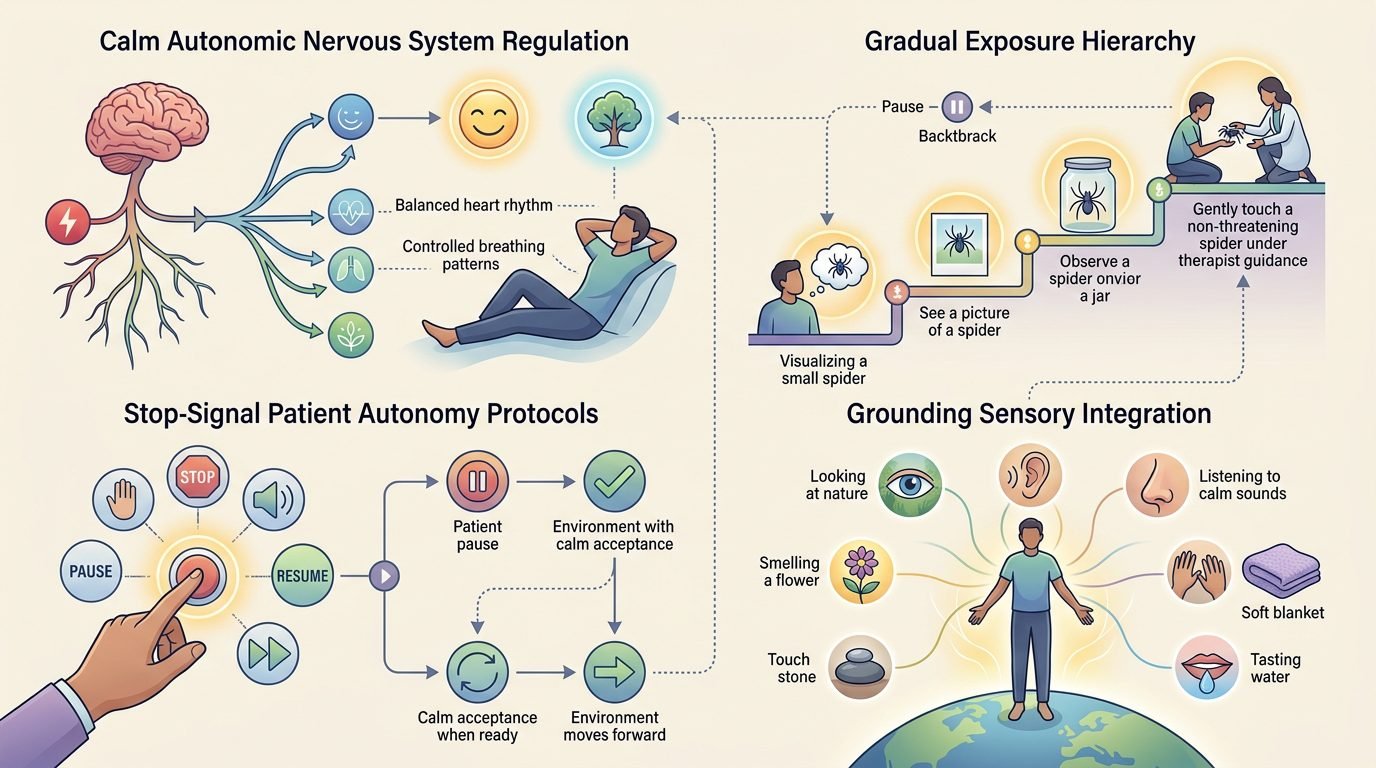
Transitioning a housebound patient from domestic palliative care to in-office clinical care requires structured, graduated in-office acclimatization based on systematic desensitization. The patient must never be coerced into a full-scale restorative appointment on their first physical visit. Instead, clinical re-entry unfolds across distinct, pre-arranged micro-steps. Step one entails an acclimatization visit where the patient travels to the clinic facility with a trusted companion solely to enter the building, view the reception area, meet the dentist in ordinary attire, and immediately depart, with no treatment attempted. Step two involves sitting in the dental chair in an upright posture for fifteen minutes while practicing diaphragmatic breathing and confirming that exit routes remain clear. The operatory door is kept open, overhead surgical lights remain dimmed, and pleasant acoustic masking reduces background instrument noise.
Once restorative or surgical procedures become unavoidable, procedural control must rest firmly in the patient’s hands. Clinicians must establish clear stop-signals, agreeing that whenever the patient raises a hand, all intraoral instruments are withdrawn instantly, without questioning or hesitation. The appointment is scheduled as the first visit of the morning or the final visit of the afternoon, eliminating patient overlap and removing reception room waiting delays. Local anesthesia requires special pharmacological formulation: to prevent the sudden tachycardia and tremulousness that mimic panic onset, the clinician should utilize plain 3 percent mepivacaine or 4 percent prilocaine with felypressin, entirely avoiding adrenergic vasoconstrictors like epinephrine. If adjunctive anxiolysis is indicated, short-acting oral benzodiazepines (such as 0.25 mg to 0.5 mg alprazolam or 5 mg to 10 mg diazepam prescribed in close collaboration with the patient’s psychiatrist) or titrated nitrous oxide-oxygen inhalation sedation provides mild psychological detachment while preserving protective airway reflexes.
The physical ergonomics of the operatory must respect the patient’s autonomic vulnerability. Full supine positioning should be avoided; maintaining a semi-reclined angle of forty-five degrees preserves the patient’s sense of physical stability, prevents feelings of positional helplessness, and avoids airway compression. Frequent breaks should be integrated every five to eight minutes to allow the patient to stretch, sip water, and re-center psychological equilibrium. Intraoral isolation should utilize flexible, non-claustrophobic retractors like OptraGate or dry-field isolation pads rather than full-arch rubber dams that can provoke sudden sensations of suffocation. Furthermore, introducing bilateral somatic grounding tools, such as tactile stress balls, weighted blankets across the legs and lap, and focused sensory distraction through noise-canceling headphones, channels cognitive attention away from autonomic panic sensations.
Interdisciplinary collaboration with mental health professionals transforms clinical outcomes. When the dental practitioner coordinates directly with the patient’s cognitive behavioral therapist, dental exposure tasks can be integrated seamlessly into the patient’s formal psychotherapy hierarchy. The therapist assists the patient in developing cognitive restructuring strategies, identifying catastrophic misinterpretations of normal dental sensations, and rehearsing in vivo exposure milestones prior to scheduled appointments. The dental team reinforces this psychological framework by maintaining steady emotional pacing, celebrating each completed micro-step without false praise, and documenting successful coping strategies within the patient’s electronic health record. Establishing predictable recall schedules every four months prevents acute biological decay and reinforces the patient’s newfound confidence in navigating healthcare environments.
Regarding modern clinical practice, providing dental care to patients with agoraphobia and panic disorder represents an expression of authentic clinical humanization. By moving beyond rigid office-centric paradigms, embracing remote tele-triage, conducting domiciliary interventions, and delivering graduated, panic-informed in-office care, dental practitioners dismantle systemic healthcare barriers. This integrated approach restores functional oral health, resolves debilitating dental infections, and helps vulnerable patients reclaim their physical autonomy and social dignity.
Leave a Reply