

Individuals with severe intellectual and developmental disabilities (IDD) experience profound systemic health disparities, exhibiting disproportionately higher rates of untreated dental caries, aggressive periodontal breakdown, and premature tooth loss compared to the general population. Historically, clinical dentistry has approached patients with profound cognitive, communicative, and sensory processing differences through a model of administrative convenience, relying heavily on routine general anesthesia, deep pharmacological sedation, or coercive physical restraint (such as papoose boards). While pharmacological sedation remains an essential medical tool for complex acute surgeries, its routine use for basic preventive hygiene reflects institutional surrender rather than therapeutic excellence. Involuntary pharmacological depression deprives individuals of procedural acclimation, carries cardiovascular and respiratory risks, and fails to address the underlying psychological barriers to oral hygiene. Delivering ethical, humanized dentistry requires structured sensory desensitization, supportive decision-making frameworks, flexible operatory adaptations, and unwavering respect for individual bodily autonomy.
The legal and ethical evolution of supported decision-making establishes the philosophical foundation of modern humanized care. Historically, individuals with severe IDD were subjected to plenary guardianship arrangements that legally erased their self-determination, reducing consent to a third-party signature on an institutional form. The United Nations Convention on the Rights of Persons with Disabilities (CRPD) mandates a paradigm shift toward supported decision-making, affirming that every human being possesses legal capacity and the inherent right to exercise bodily autonomy regardless of cognitive impairment. In the dental operatory, supported decision-making requires the clinical team to engage the patient directly through accessible, multi-modal communication. Clinicians must utilize visual communication boards, pictorial schedule cards (PECS), social stories, and tablet-based augmentative and alternative communication (AAC) devices to explain procedures before touching the patient. Legal guardians and personal support professionals serve as relational communication bridges rather than surrogate decision-makers who bypass the patient.
Sensory processing sensitivities represent the primary physiological triggers of procedural distress and aggressive resistance. Many individuals with severe IDD, particularly those with co-occurring autism spectrum conditions, experience profound sensory modulation dysfunctions, including tactile defensiveness, auditory hypersensitivity, and vestibular disorientation. Standard operatory environments represent overwhelming sensory minefields: fluorescent overhead lighting produces visual glare, high-speed handpieces generate high-frequency acoustic distress, ultrasonic scalers induce bone-conducted vibrational discomfort, and suction tips provoke tactile panic. The humanized dental operatory must be systematically desensitized: overhead surgical lamps should be dimmed or redirected, replacing direct illumination with lightweight headlamps worn by the operator. Acoustic trauma should be mitigated using noise-canceling headphones playing familiar calming music or white noise. Scented prophylaxis pastes must be replaced with unflavored, dye-free pastes to eliminate olfactory overload.
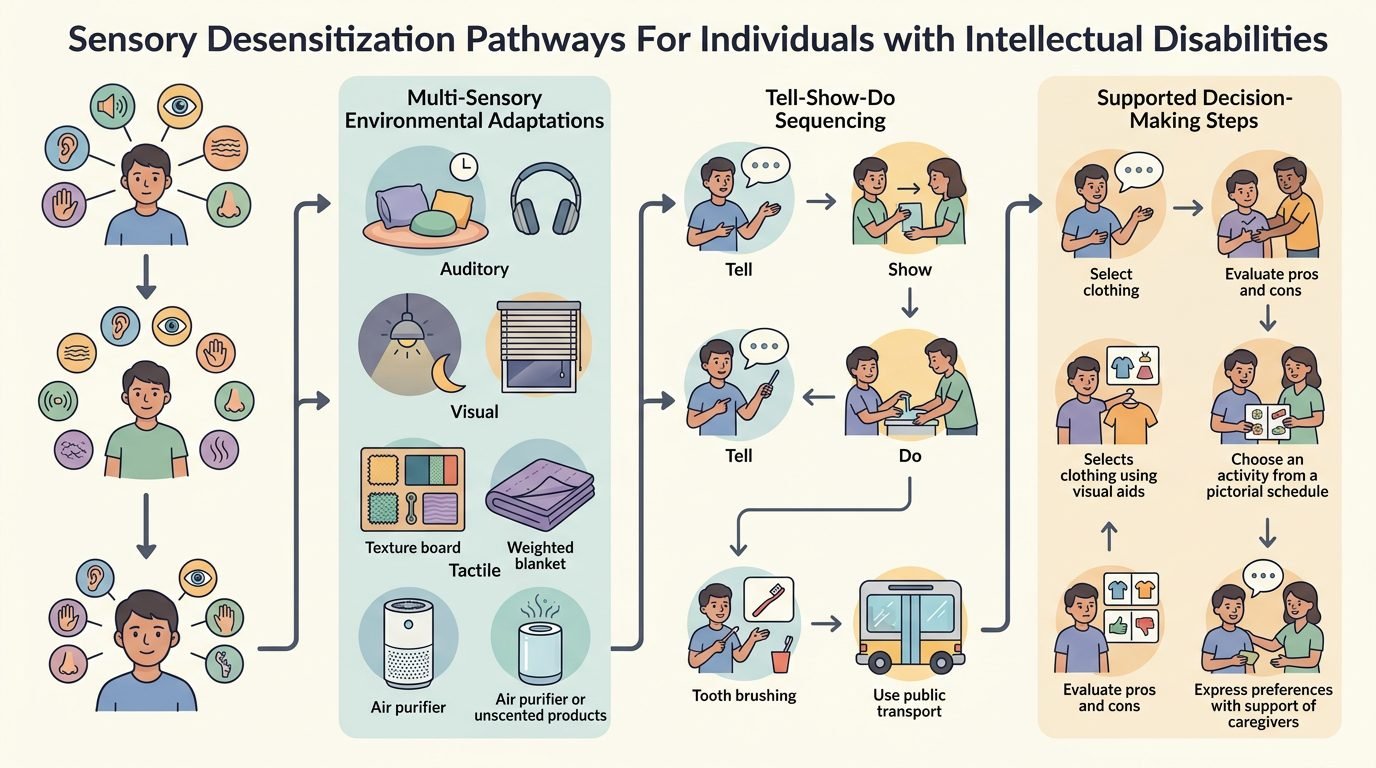
Systematic behavioral desensitization through graded behavioral shaping builds durable clinical familiarity. Successful dental rehabilitation should rarely be attempted in a single high-stress appointment. Instead, clinicians should implement a multi-visit acclimation pathway consisting of brief, non-threatening appointments spaced at weekly or bi-weekly intervals. During initial visits, the patient explores the dental operatory without sitting in the chair, touching instruments, listening to suction sounds, and interacting with staff. Subsequent appointments introduce the tell-show-do technique in micro-steps: the clinician tells the patient what will happen using simplified vocabulary or pictorial cards, shows the instrument by touching it to the patient’s hand or arm, and only then performs the step intraorally for three to five seconds. Reinforcing cooperation with immediate positive feedback, preferred sensory toys, or structured praise cements somatic safety.
Operatory ergonomics and physical stabilization must respect personal comfort while safeguarding clinical safety. The use of rigid mechanical papoose boards or forced manual pinning of limbs produces severe psychological terror, muscular trauma, and autonomic distress, reinforcing dental avoidance for life. Non-coercive physical containment should utilize soft, proprioceptive deep-pressure garments (such as weighted blankets, compression vests, or beanbag positioners) that provide calming sensory input. When physical assistance is needed to stabilize the head or hands during delicate instrumentation, it must be performed gently by a trusted parent or caregiver using compassionate holding techniques, with immediate release if the patient signals distress. Clinicians should maintain semi-supine chair angulation to preserve vestibular equilibrium and use medical-grade silicone bite blocks (Logi-Bloc) secured with dental floss to protect against involuntary jaw closure.
Preventive and minimally invasive restorative philosophies minimize the biological burden and sensory stress of clinical dental intervention. Traditional operative dentistry requiring rotary high-speed tooth preparation, local anesthetic infiltration needles, and rubber dam clamp isolation often drastically exceeds the sensory coping threshold of patients with severe neurodevelopmental differences. Clinicians should prioritize the Atraumatic Restorative Treatment (ART) approach, utilizing sharp manual excavators to gently clear infected soft necrotic dentin, followed by direct restoration and therapeutic fissure sealing with high-viscosity glass ionomer cements (GIC) that chemically bond to enamel and dentin while continuously releasing protective fluoride ions. For active cavitated carious lesions in non-restorable stages or uncooperative moments, topical application of thirty-eight percent silver diamine fluoride (SDF) provides immediate, non-invasive bacterial arrest and dentin remineralization without requiring local anesthesia, mechanical drilling, or surgical excavation. Silver diamine fluoride transforms complex dental pathologies into stable, cleansable, hardened dark surfaces in thirty seconds, eliminating the immediate necessity for operating room admissions and general anesthesia.
Comprehensive caregiver training represents the cornerstone of long-term oral health maintenance. In institutional group homes and family residences, oral hygiene is frequently compromised by staff turnover, lack of specialized training, or aggressive patient resistance during brushing. The dental team must deliver hands-on, empathetic coaching to primary caregivers, demonstrating practical positioning strategies (such as the two-person brushing technique or seated lap-to-lap positioning for wheelchair users). Caregivers should be introduced to adaptive oral hygiene aids, including three-sided surround toothbrushes, electric sonic toothbrushes with small round brush heads, and non-foaming, swallow-safe fluoride dentifrices. Prescribing high-concentration sodium fluoride gels (5000 ppm) or water-soluble chlorhexidine gels applied with soft swabs provides chemical protection against plaque-induced gingivitis and root caries.
Interprofessional collaboration with occupational therapists, speech-language pathologists, and behavioral analysts enriches the dental care plan. Occupational therapists can evaluate the patient’s sensory profile, recommending specific sensory diets, proprioceptive inputs, or weighted supports tailored to the patient’s individual regulatory needs. Behavioral therapists can assist in designing individualized positive behavior support (PBS) plans and token economy reinforcement systems that align dental cooperation with the patient’s home behavioral routines. This interdisciplinary synergy ensures that dental care is integrated into the individual’s broader developmental and therapeutic life.
Regarding clinical practice, treating individuals with severe intellectual and developmental disabilities embodies the true moral essence of humanized dentistry. By systematically replacing routine pharmacological sedation and physical restraint with patient-centered supported decision-making, meticulous sensory desensitization, minimally invasive biological interventions, and collaborative caregiver coaching, the dental team successfully eliminates historical systemic barriers to preventive oral health. This enlightened ethical, compassionate commitment upholds fundamental human dignity, demonstrating conclusively that excellent, high-quality, trauma-free dental care is achievable for every human being regardless of cognitive or developmental complexity.
Leave a Reply