

Human trafficking represents an egregious global violation of fundamental human rights, encompassing labor exploitation, commercial sexual exploitation, and involuntary servitude through force, fraud, or coercion. Clinical research reveals that over fifty to seventy percent of human trafficking survivors access healthcare facilities at least once while still under the direct control of their exploiters, with dental clinics representing a frequent yet drastically underutilized point of contact. Victims are often brought to dental offices for acute emergency conditions that visibly impair physical appearance or prevent exploitation, such as severe facial trauma, visible tooth loss, or debilitating dental abscesses. Dental professionals occupy an exceptional front-line position to recognize indicators of trafficking, provide trauma-informed, safe dental interventions, and implement strict confidentiality protocols that protect the patient’s immediate physical safety.
Recognizing intraoral, cervical, and craniofacial indicators requires high diagnostic vigilance during the routine dental examination. Survivors of labor and sex trafficking frequently endure repetitive, severe physical abuse inflicted by handlers or exploiters. Extraoral inspections may reveal old untreated fractured zygomatic arches, persistent nasal bone deformities, malaligned mandibular fractures, bilateral periorbital ecchymoses, or linear lacerations at multiple disparate stages of tissue healing across the face, neck, and ears. Intraorally, clinicians frequently document multiple fractured, avulsed, or untreated missing anterior teeth completely inconsistent with the reported trauma history, chronic rampant coronal and root dental caries, caustic chemical burns of the buccal mucosa, severe localized periodontal bone destruction, and unreduced alveolar bone fractures. In survivors of commercial sexual exploitation, clinicians may identify specific trauma patterns associated with forced oral sex, including extensive soft palate bruising, clusters of submucosal petechiae at the junction of the hard and soft palate, diffuse pharyngeal erythema, intraoral condyloma acuminata lesions, or primary oral syphilitic chancres.
Behavioral patterns and social dynamics offer critical contextual clues that complement physical findings. Trafficked individuals are almost universally accompanied by a controlling handler, trafficker, or coercive employer who poses as a spouse, parent, employer, or helpful translator. This accompanying individual typically insists on remaining in the operatory room at all times, attempts to answer every clinical question on the patient’s behalf, and maintains continuous, vigilant eye contact to monitor the patient’s speech. The patient may avoid eye contact, exhibit profound fear, show signs of hypervigilance, and possess no personal identification, health insurance, or financial control. When clinical questions regarding medical history or address are asked, the patient may provide rehearsed, inconsistent, or geographically disoriented answers.
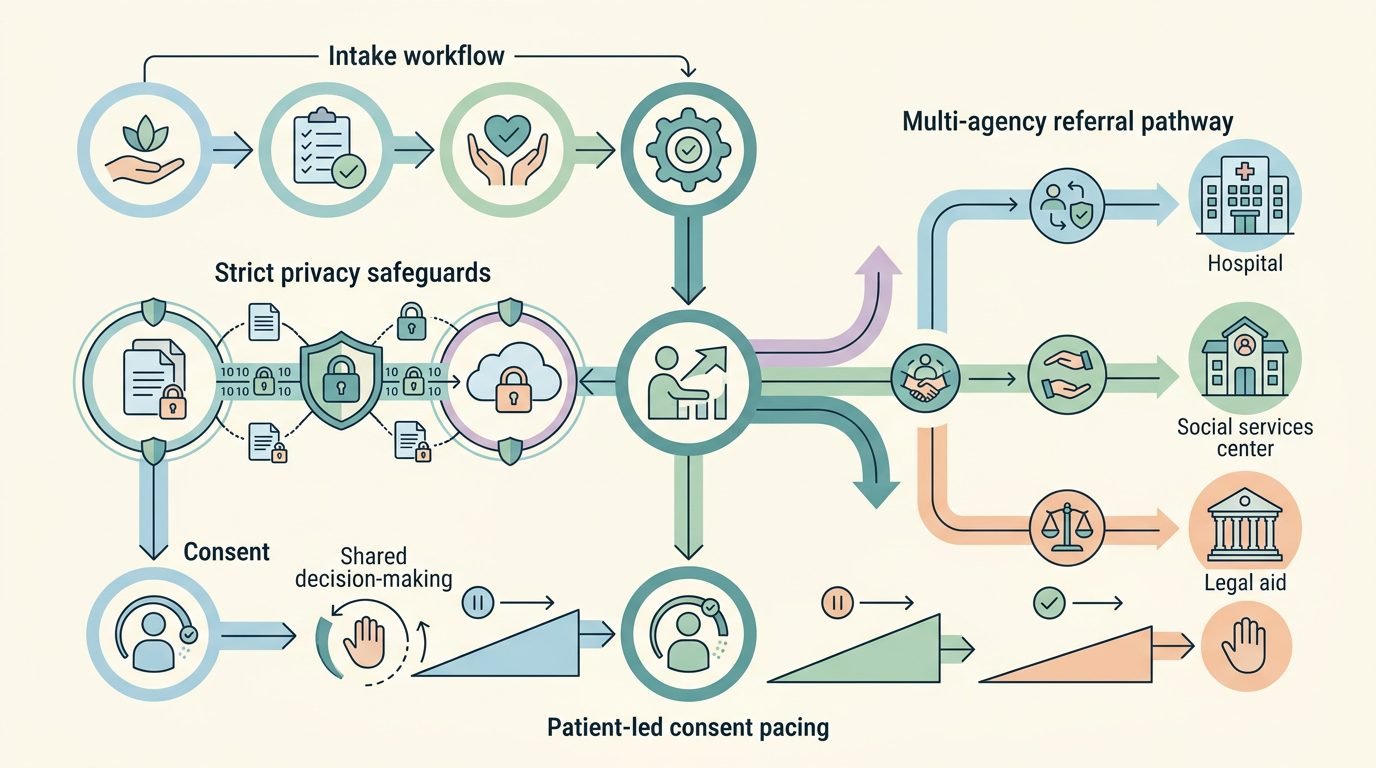
Establishing private communication while managing the controlling handler requires strategic clinical choreography. Clinicians must never confront the suspected trafficker or express overt suspicion in the operatory, as doing so can trigger immediate retaliation, physical violence, or immediate relocation of the victim to another city. Instead, the dental team must utilize institutional clinical safety protocols to gently separate the patient from the accompanying individual. Standard clinical rationales, such as taking intraoral dental radiographs, conducting panoramic tomography in an adjacent shielded room, or performing mandatory sterile health screenings, provide neutral, non-confrontational justifications for moving the patient into a secure, private clinical space where the handler is barred by radiation safety laws.
Trauma-informed dental examination protocols must be enacted the instant privacy is secured. Survivors of human trafficking have endured profound systematic violations of bodily integrity, autonomy, and personal dignity. The clinical team must approach all physical examinations with transparent narration and explicit verbal permission before touching the patient’s body. Clinicians should avoid reclined or supine chair positions during initial discussions, keeping the patient upright and at eye level. The operatory door must remain unlocked, and clear visual exit pathways must remain unobstructed. When performing intraoral evaluations, clinicians should proceed gently, avoiding sudden movements, loud metallic clatter, or passing instruments directly over the patient’s face. If the patient displays signs of physiological dissociation, panic, or trembling, the clinician must pause immediately, step back, and offer sensory grounding through calm, respectful presence.
Documentation practices must be executed with meticulous clinical objectivity and rigorous forensic precision. The dental chart represents a formal legal medical document that may ultimately serve as material clinical evidence in criminal prosecutions, humanitarian visa applications, or international asylum hearings. Clinicians must record physical findings using neutral, precise anatomical descriptions without subjective editorializing, judgmental language, or clinical speculation. The documentation should include precise measurements of injury locations, dimensional sizes in millimeters, coloration, and morphological stages of tissue healing, supplemented by high-resolution intraoral and extraoral clinical photography whenever explicit, written consent is granted by the patient. Exact verbal statements made by the patient regarding the traumatic origin of their injuries should be transcribed verbatim in quotation marks. Clinicians must never document speculative assertions such as patient is a trafficking victim in standard administrative billing files that could be viewed by insurance carriers, third parties, or unauthorized front-desk personnel.
Confidentiality protocols and physical security represent the patient’s lifeline. The clinician must explicitly explain patient confidentiality, clarifying that medical records are protected by law and will not be shared with employers, partners, or immigration authorities. However, clinicians must also maintain nuanced understanding of mandatory reporting boundaries: in most jurisdictions, mandatory reporting applies strictly to suspected child abuse, elder abuse, or acute gunshot/stab wounds. For autonomous adult survivors of human trafficking, clinicians must never report the situation to law enforcement without the adult patient’s explicit, informed consent. Involuntary police reporting by well-intentioned healthcare providers can place the survivor in immediate danger of retaliatory homicide by criminal trafficking networks or trigger deportation for undocumented individuals.
Establishing structured, safe referral pathways is the clinician’s primary social responsibility. The dental clinic should maintain readily accessible, discreetly placed anti-trafficking referral materials in private restrooms, such as cards with the National Human Trafficking Hotline number disguised as emergency dental contact cards. When an adult patient discloses that they are in an exploitative situation and requests assistance, the clinician should offer direct, private access to a secure telephone and facilitate immediate connection with specialized anti-trafficking advocacy organizations, secure shelters, or specialized social work units. If the patient declines assistance, the dental team must respect their decision, treat their immediate dental pain with clinical excellence and dignity, and leave the clinical door permanently open for future safe contact.
Regarding clinical practice, addressing human trafficking within the dental operatory transforms routine dental intervention into a direct, active safeguard of human life and fundamental human rights. By systematically cultivating diagnostic awareness of intraoral trauma indicators, mastering safe separation choreography away from controlling handlers, applying trauma-informed clinical examination principles, and safeguarding absolute legal and medical confidentiality, the dental team establishes an invaluable sanctuary of safety. This compassionate, humanized clinical commitment restores oral health, mitigates acute physical suffering, and offers vulnerable survivors a discreet, empowering bridge toward autonomy, physical security, and ultimate personal liberation.
Leave a Reply