

Dental patients with obsessive-compulsive disorder experience psychological distress fueled by contamination obsessions, cross-infection fears, and compulsive hygiene rituals that cause self-inflicted tissue destruction. Obsessive-compulsive disorder (OCD) affects two to three percent of the population, characterized by intrusive thoughts and repetitive acts designed to neutralize anxiety. In oral healthcare, OCD manifests across two clinical extremes: patients who destroy gingival margins and enamel through hours of compulsive scrubbing, or individuals who avoid professional care for decades fearing lethal bloodborne pathogens. Dismissing these contamination obsessions fractures the therapeutic alliance. Managing oral care in OCD demands infection-control transparency, rigid behavioral boundaries around home hygiene, and communication that avoids reinforcing reassurance loops.
Neurobiological Framework: Cortico-Striato-Thalamo-Cortical Hyperactivity
The pathophysiology of obsessive-compulsive disorder involves functional hyper-connectivity within cortico-striato-thalamo-cortical (CSTC) neuro-circuits, particularly the orbitofrontal cortex and anterior cingulate gyrus. In neurotypical brains, completing a hygiene task generates an internal neurochemical sense of completion or “safety.” In patients with OCD, this error-detection signaling system misfires continuously.
The brain fails to register somatic feedback confirming that a tooth surface or operatory surface is clean. Consequently, intrusive contamination thoughts (“My mouth contains toxic pathogens that will enter my bloodstream and cause sepsis”) persist unabated. To neutralize the resulting terror, the patient executes repetitive motor compulsions. In the dental operatory, environmental cues such as ultrasonic water aerosols, chemical disinfectant smells, and suction tubing act as immediate triggers that provoke acute autonomic panic and hypervigilant scanning for perceived aseptic flaws.
The Spectrum of Self-Inflicted Oral Trauma from Compulsive Cleaning
Compulsive oral cleaning represents a destructive behavioral manifestation of contamination OCD. Driven by the intrusive conviction that oral biofilms will poison their systemic health, patients subject their oral tissues to relentless chemical and mechanical trauma. Clinicians frequently observe generalized V-shaped cervical hard-tissue defects, severe enamel loss, and deep gingival clefting resembling Stillman’s clefts.
In severe presentations, patients scrub their teeth for forty-five minutes after meals using hard bristles, detergents, sodium hypochlorite, or pure hydrogen peroxide rinses. This corrosive regimen destroys keratinized gingiva, strips cementum, and exposes dentinal tubules, producing hypersensitivity and pulp necrosis. Patients often utilize sewing needles, paper clips, or safety pins to pick at interdental papillae, creating alveolar bone loss and chronic ulcerations. Clinicians must identify the obsessive origin of these injuries, avoiding plaque-control scolding that accelerates panic-driven scrubbing cycles.
Aseptic Avoidance: The Terror of Dental Cross-Infection
At the opposite pole of the clinical spectrum are patients whose contamination obsessions trigger complete avoidance of professional dental clinics. These individuals harbor catastrophic fears of contracting human immunodeficiency virus (HIV), hepatitis C, multi-drug resistant bacteria, or prion diseases from dental chairs and instruments.
For such patients, stepping into a dental operatory requires crossing a psychological minefield. They perceive the water reservoir, the dental light handle, the clinician’s gloves, and the saliva ejector as vectors of lethal contamination. Rather than risk perceived infection, they endure severe toothaches, untreated periapical abscesses, and masticatory breakdown in isolation. When tooth pain finally forces an emergency visit, their hypervigilance is intense: they track every movement of the clinical staff, inspect instrument trays for water spots, and experience acute panic if an assistant touches a computer mouse before donning sterile gloves.
Operatory Protocol: Infection Control Transparency and Spatial Predictability
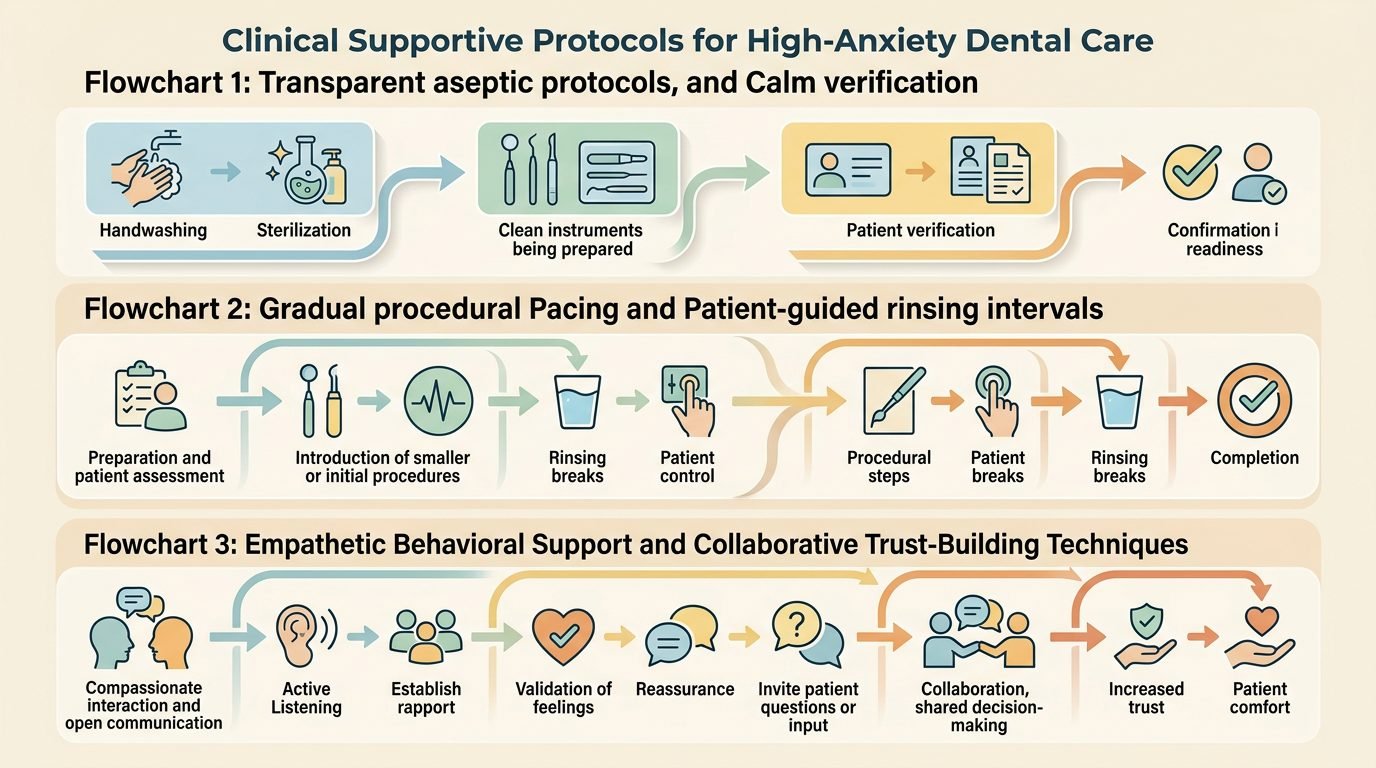
Overcoming cross-infection terror requires active transparency rather than defensive reassurance. Clinicians should acknowledge the patient’s concern directly, transforming routine clinical preparation into a visible demonstration of surgical-grade safety.
The clinical team must never pre-set instrument trays before the patient enters the operatory. Instrument cassettes and sterile pouches containing color-changing chemical indicators must remain sealed on the bracket table. Upon welcoming the patient, the clinician points out the external and internal chemical integrators, explaining: “This pouch changed color from pink to black inside our autoclave at 134 degrees Celsius, confirming complete biological sterilization. We are breaking this seal now specifically for your care.” Furthermore, suction lines should be fitted with disposable anti-retraction valves in front of the patient, explaining how modern valves prevent fluid backflow. Demonstrating surface barrier films and single-use disposable consumables grounds the patient’s cognitive processing in verifiable physical reality.
De-Escalating Somatic Reassurance Loops and Sepsis Anxiety
Following restorative procedures, extractions, or periodontal therapy, patients with health-related OCD frequently enter relentless reassurance-seeking cycles. Driven by hypochondriacal fears of systemic sepsis, they scrutinize extraction sockets twenty times daily with flashlight mirrors, interpreting normal post-extraction fibrin clots as necrotic gangrene.
They inundate the dental clinic with multiple daily phone calls, demanding endless confirmations that they are not developing sepsis. Clinicians must recognize that providing unconditional verbal reassurance (“Do not worry, everything looks completely fine”) provides only momentary relief while biologically reinforcing the obsessive doubt loop. Instead, the clinician should implement a structured post-operative contract: schedule a concrete, in-person clinical check at day three and day seven, while agreeing on a strict protocol for phone updates. Clinicians must educate the patient on objective somatic red flags (fever above 38.5 degrees, progressive extraoral facial swelling, difficulty swallowing) while instructing them to log subjective anxieties in a journal rather than re-checking the mirror.
Restructuring Home Oral Hygiene: Boundary Setting and Tool Modification
To halt self-inflicted mechanical tooth abrasion, clinicians must strictly prescribe mechanical hygiene boundaries. Clinicians should confiscate or ban all hard manual toothbrushes, baking soda, and abrasive pastes. The patient is prescribed an ultra-soft surgical toothbrush or an oscillating-rotating electric toothbrush equipped with an active mechanical pressure sensor that automatically disengages the motor if excessive brushing force is applied.
The clinician introduces a concrete time boundary: a digital kitchen timer is set to exactly two minutes twice daily. The patient is given explicit clinical permission to stop when the timer sounds, regardless of whether their teeth “feel clean enough.” Prescribing a neutral, non-stinging remineralizing paste containing nano-hydroxyapatite or 5,000-ppm sodium fluoride repairs exposed dentin while removing the chemical burning sensation that fuels sensory panic. Partnering with the patient’s treating psychiatrist or cognitive-behavioral therapist ensures that dental boundary setting aligns with systemic exposure and response prevention (ERP) protocols.
Clinical Synthesis for Neuro-Affirming Dental Teams
Dental care for patients with obsessive-compulsive disorder requires practitioners to balance technical dental restorative skill with sophisticated behavioral boundaries. By replacing defensive defensiveness with visible sterilization transparency, halting abrasive scrubbing with pressure-controlled electric instrumentation, and managing reassurance seeking with structured communication, clinicians prevent iatrogenic trauma. Understanding OCD as a neurobiological disorder protects vulnerable dentitions and establishes enduring clinical trust with patients battling intrusive fears.
References
- Cruz, F. Z., et al. (2018). Obsessive-compulsive disorder and oral health: clinical manifestations and dental management. Journal of the American Dental Association, 149(8), 714-722.
- Diefenbach, G. J., et al. (2007). Dental anxiety and obsessive-compulsive disorder: a clinical review. General Hospital Psychiatry, 29(5), 438-444.
- Fineberg, N. A., et al. (2020). New horizons in the treatment of obsessive-compulsive disorder. European Neuropsychopharmacology, 36, 172-181.
- Glick, M. (2005). Compulsive tooth brushing: diagnosis and treatment protocol. Journal of Clinical Dentistry, 16(2), 52-57.
- Rasmussen, S. A., & Eisen, J. L. (1992). The epidemiology and clinical features of obsessive compulsive disorder. Psychiatric Clinics of North America, 15(4), 743-758.
Leave a Reply