

Providing dental care to patients diagnosed with bipolar disorder requires distinct clinical adaptations tailored to mood phase instability, psychopharmacological adverse effects, and elevated periodontal and cariogenic vulnerabilities. Bipolar disorder manifests as cyclic oscillations between manic or hypomanic states and major depressive episodes, interspersed with periods of euthymia. The oral health status of these individuals frequently deteriorates due to neglected hygiene during depressive inertia or aggressive, traumatic brushing during manic hyperactivation. Furthermore, foundational mood stabilizers like lithium carbonate and atypical antipsychotics induce severe salivary hypofunction and dysgeusia. Clinicians must adapt appointment pacing, anticipate pharmacological drug interactions, and maintain non-judgmental communication to ensure treatment continuity without precipitating emotional destabilization.
Psychopharmacological Landscape: Lithium Toxicity and Drug Interactions
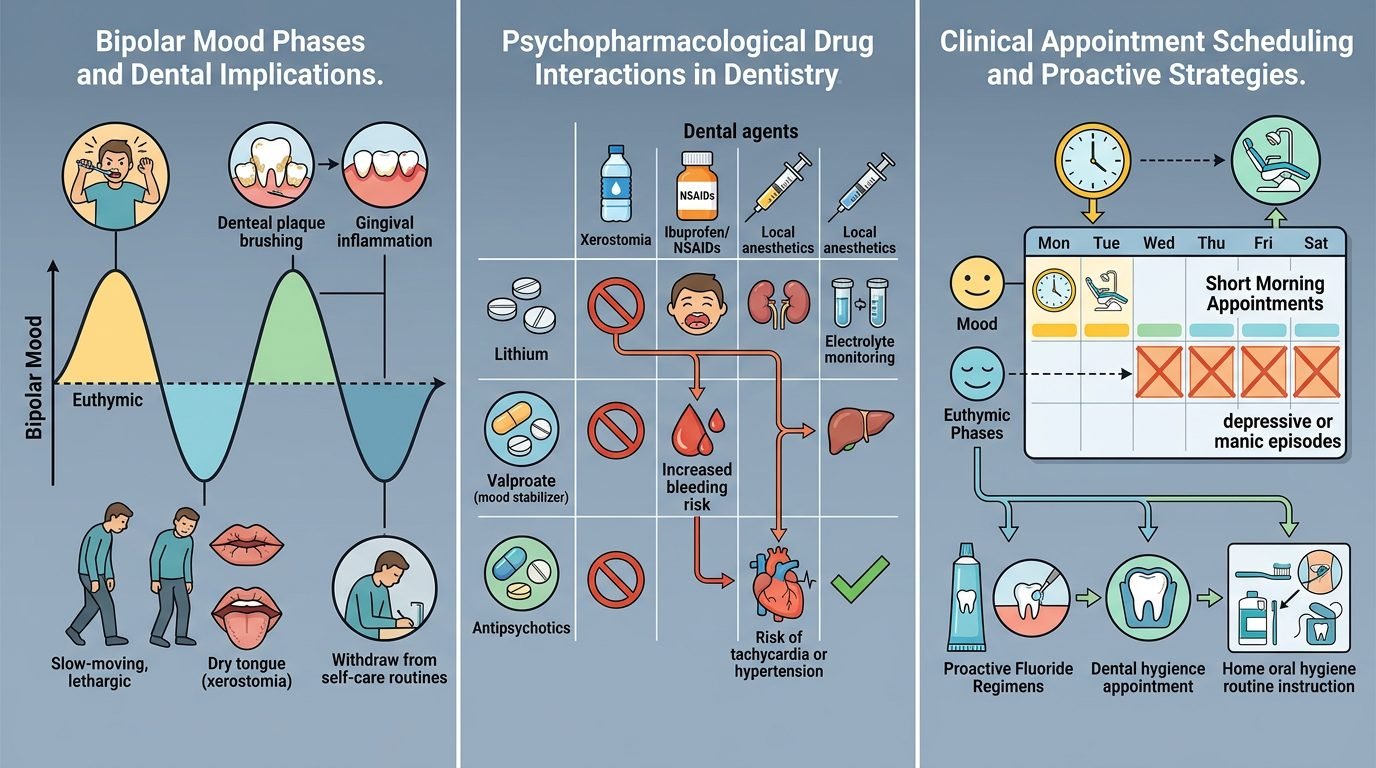
Understanding psychiatric medications prescribed for mood stabilization prevents severe systemic complications in the dental chair. Lithium carbonate remains the gold standard mood stabilizer but possesses a remarkably narrow therapeutic index (0.6 to 1.2 mEq/L). Even minor fluctuations in renal clearance can provoke acute lithium toxicity, manifesting as muscle tremors, ataxia, slurred speech, confusion, and cardiac arrhythmias.
The prescription of nonsteroidal anti-inflammatory drugs (NSAIDs) such as ibuprofen, naproxen, or celecoxib reduces renal prostaglandin synthesis and decreases lithium excretion, elevating serum lithium concentrations into toxic ranges within two to five days. Dentists must manage acute odontogenic pain with acetaminophen or paracetamol, reserving short-term weak opioids if necessary, while avoiding systemic NSAIDs. Furthermore, valproic acid can induce dose-dependent thrombocytopenia and platelet dysfunction; clinicians must request a complete blood count and coagulation profile prior to invasive periodontal or oral surgical procedures. Macrolide antibiotics (erythromycin, clarithromycin) interfere with carbamazepine metabolism, precipitating neurotoxicity. Local anesthetics containing epinephrine must be administered with aspiration and limited to two cartridges (1:100,000) when patients take tricyclic antidepressants or monoamine oxidase inhibitors, avoiding sudden hypertensive spikes.
Salivary Gland Hypofunction and Accelerated Caries Dynamics
Chronic psychotropic therapy severely suppresses salivary output. Lithium, valproate, lamotrigine, and quetiapine exhibit prominent anticholinergic and sympathetic inhibitory profiles that diminish resting and stimulated saliva flow rates. Unstimulated salivary flow often falls below 0.1 mL/min, eliminating the biological buffer system provided by salivary bicarbonate.
This xerostomic state alters oral microecology, precipitating candidiasis, cervical and root caries, burning sensations, and rapid enamel erosion. During depressive episodes, patients frequently consume high-sucrose, processed comfort foods and refined carbohydrates while neglecting routine tooth cleaning for weeks or months. During manic episodes, patients may consume massive amounts of acidic energy drinks, acidic sodas, and stimulants to sustain euphoria, eroding exposed dentin. Preventive therapy must institute non-acidic salivary substitutes, high-concentration fluoride gels (5000 ppm sodium fluoride), and amorphous calcium phosphate remineralization regimens. Chewing sugar-free xylitol gums stimulates residual minor salivary gland secretion, inhibits mutans streptococci proliferation, and mechanically cleanses vulnerable interproximal embrasures without causing enamel demineralization.
Clinical Protocol in the Depressive Phase: Apathy and Executive Dysfunction
The depressive phase of bipolar disorder presents with psychomotor retardation, fatigue, profound sadness, abulia, and impaired executive functioning. Oral self-care collapses not out of defiance, but because basic motor initiation requires overwhelming psychological effort. Patients often arrive late, miss sequential appointments, or present with extensive, neglected dentitions.
The clinical team must eliminate confrontation and guilt-inducing statements regarding oral neglect. Adopting a supportive, empathetic posture validates their struggle: “We understand that maintaining brushing has been exhausting recently; we are here to support your mouth today without judgment.” Appointments should be scheduled in the late morning or early afternoon, as morning melancholia and sedative hangover impede early awakening. Dental procedures must focus on stabilization, pain relief, temporary glass ionomer restorations, and supragingival biofilm debridement. Complex, multi-stage aesthetic or reconstructive plans should be deferred until mood stabilization is achieved.
Clinical Protocol in the Manic or Hypomanic Phase: Pacing and Boundaries
The manic phase is characterized by grandiosity, pressured speech, motor agitation, irritability, distractibility, and impulsivity. In the dental operatory, manic patients may insist on radical, unrealistic treatment requests, demand instant total aesthetic makeovers, dispute financial arrangements, or attempt to leap out of the chair mid-procedure.
Managing the manic patient requires firm, calm boundaries and reduced sensory stimuli. The operatory lights should be dimmed, background music muted, and conversations focused strictly on one concrete task at a time. The dentist must decline signing long-term irreversible contracts or performing aggressive cosmetic amputations during manic euphoria, as post-manic remorse often leads to legal conflicts or severe despair. During acute mania, procedures should be restricted strictly to urgent infection control and trauma management. The practitioner maintains a quiet, grounded vocal tone, never arguing with grandiose claims, while gently redirecting focus to immediate comfort.
Periodontal Trauma and Oral Parafunction
Oral manifestations unique to manic episodes include severe mechanical tissue abrasion and occlusal trauma. In hypomanic states, excessive energetic drive leads patients to scrub teeth vigorously with hard-bristled brushes multiple times an hour. This results in wedge-shaped cervical abrasions, gingival lacerations, and severe dentin hypersensitivity. Additionally, psychomotor agitation elevates awake clenching and nocturnal bruxism, precipitating tooth fractures, mobile prosthetics, and painful temporomandibular joint capsulitis.
The clinician should prescribe ultra-soft, compact toothbrushes, demonstrate modified Bass technique with minimal manual pressure, or recommend pressure-sensing electric brushes that halt motion upon excessive force. Fabricating a resilient occlusal splint protects remaining enamel from occlusal microtrauma during fluctuating mood cycles. Clinicians must also anticipate orthostatic hypotension when returning patients to an upright posture, as alpha-adrenergic antagonism from antipsychotic agents can induce transient cerebral ischemia and syncope upon rapid standing.
Interprofessional Collaboration and Long-Term Supportive Care
Achieving sustainable oral health requires active communication with the patient’s psychiatrist, psychologist, and primary physician. With proper patient consent, the dental team should verify current psychotropic dosages, recent lithium blood levels, and the anticipated stability of the current cycle before undertaking surgical interventions.
Recall intervals should be compressed to two or three months rather than biannual check-ups. Frequent short visits maintain biofilm control, provide ongoing positive reinforcement, and allow the dentist to observe subtle changes in speech cadence or physical appearance that signal an emerging relapse. By integrating psychopharmacological knowledge, ergonomic sensitivity, and unconditional empathy, the dental team establishes an indispensable health sanctuary for individuals navigating the complexities of bipolar disorder.
References
- Clark, D. B. (2003). Dental care for patients with bipolar disorder. Journal of the Canadian Dental Association, 69(1), 20-24.
- Friedlander, A. H., et al. (2002). Bipolar disorder: medical and psychiatric management, dental considerations and interactions. The Journal of the American Dental Association, 133(9), 1209-1217.
- Kisely, S., et al. (2015). Advanced dental disease in people with severe mental illness: systematic review and meta-analysis. The British Journal of Psychiatry, 207(3), 189-197.
- Little, J. W., et al. (2018). Dental Management of the Medically Compromised Patient (9th ed.). Elsevier.
- Tiwari, T., et al. (2022). Dental health and oral health-related quality of life in patients with severe psychiatric disorders. Special Care in Dentistry, 42(1), 45-54.
Leave a Reply