
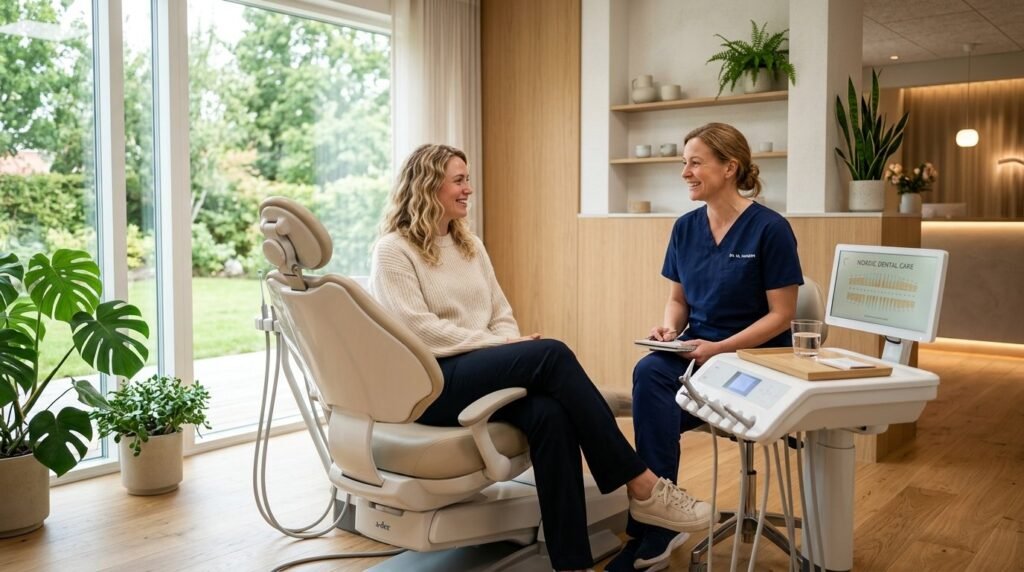
Dental phobia is an unconditioned autonomic reflex rather than a psychological weakness. The nervous system registers the dental chair as a confinement trap. Blood pressure spikes. Norepinephrine floods systemic circulation within milliseconds of seating. Dentists frequently misinterpret this acute neuroendocrine surge as patient obstinacy or mere behavioral noncompliance. That clinical assumption is scientifically bankrupt.
Fear shuts down rational cognition. When high-frequency auditory oscillations from an air-turbine handpiece strike the tympanic membrane, sensory afferents bypass the prefrontal cortex completely. Signals proceed directly to the basolateral amygdala. Survival circuits take control of somatic function before the patient can process a verbal greeting. We observe peripheral vasoconstriction, diaphoresis, pupillary dilation, and muscular bracing. The body prepares for physical trauma. Reasoning with a patient in full amygdaloid hijack is clinically useless.
The Afferent Circuitry of Sensory Trauma
Sound triggers survival physiology. The standard dental drill emits noise between 65 and 85 decibels at frequencies approximating 4,000 Hertz. This exact acoustic band matches the distress vocalization threshold programmed into primate evolutionary biology. It is not an accident that patients recoil. The human auditory pathway connects directly with the reticular activating system, alerting subcortical defense centers of imminent physical breach.
Smell compounds this distress. Volatile methyl methacrylate and eugenol vaporize into operatory air, penetrating olfactory receptors without thalamic gating. Olfaction possesses an unmediated anatomical bridge to the limbic hippocampus. Odors resurrect visceral procedural memories dating back decades. A single inhalation of zinc oxide paste can reactivate childhood restraint terror in seconds.

Sight completes the threat triad. Metallic syringes, sharp explorers, and overhead halogen lamps cast intense light into dilated pupils. The supine chair orientation strips away somatic agency. Lying horizontal under foreign hands triggers vestibular vulnerability. The vestibular nuclei project directly to the dorsal motor nucleus of the vagus nerve. Nausea, dizziness, and claustrophobic panic follow as direct neuroanatomical consequences of physical positioning.
Biochemical Biomarkers in the Operatory Bloodstream
Stress is chemical. Salivary alpha-amylase and free cortisol provide quantifiable proof of procedural terror. Studies measuring salivary biomarkers show severe dental phobics maintain baseline alpha-amylase levels three hundred percent higher than calm controls prior to anesthetic injection. Their adrenal glands operate in sustained overdrive.
Tachycardia impairs local anesthetic safety. Epinephrine included within standard two percent lidocaine formulations compounds endogenous adrenergic output. When an anxious patient receives an infiltration containing 1:100,000 epinephrine, systemic beta-1 adrenoreceptors experience dual excitation from both adrenal medulla secretion and dental injection. Heart rates exceed 140 beats per minute. Premature ventricular contractions occur with measurable clinical frequency.
Pain thresholds collapse. Hypervigilance lowers nociceptive thresholds via descending serotonergic and noradrenergic spinal tract inhibition. Under acute fear, non-painful tactile sensations are processed centrally as severe laceration. The clinician assumes local anesthesia failed. In reality, central sensitization converted mechanical vibration into excruciating perception.
Deconstructing the Odontophobic Spiral
Avoidance breeds disease. Patients avoid prophylaxis for ten, fifteen, or twenty years due to persistent anticipatory dread. Chronic periodontitis and extensive carious lesions advance uninterrupted in the dark. By the time acute apical abscess forces an emergency visit, tissue destruction requires aggressive mechanical debridement.
Aggression validates fear. An emergency extraction performed under tissue inflammation and high systemic acidity often resists local lidocaine diffusion. The procedure hurts. The patient leaves the operatory with fresh neurobiological reinforcement that dental clinics inflict physical damage. The avoidance cycle resets with greater neural rigidity. Breaking this pathway requires biological disruption rather than polite platitudes.
Silence is therapeutic. Replacing pneumatic rotational turbines with noiseless Er:YAG lasers and hard-tissue diode instruments eliminates 4,000 Hertz vibration entirely. Er:YAG water-mediated ablation vaporizes mineralized carious dentin through microscopic micro-explosions without mechanical friction or high-pitch turbine screeches. The ear detects water spray instead of bone resonance. Amygdala excitation drops significantly.
Clinical Protocol for Parasympathetic Recruitment
Clinicians must actively shift the autonomic tone. You cannot talk someone out of an adrenal cascade; you must recruit the parasympathetic vagal brake through biophysical intervention.
Posture dictates autonomic state. Never lower an anxious patient into a full Trendelenburg position immediately. Maintain a forty-five-degree semi-supine angle during the introductory assessment. This preserves visual sightlines and vestibular equilibrium, preventing the acute baroreceptor activation that precipitates presyncope. Autonomy calms the brain.
Pacing controls ventilation. Hyperventilation drives respiratory alkalosis, dropping arterial carbon dioxide and inducing cerebral vasoconstriction with lightheadedness. Enforcing prolonged exhalations resets arterial blood gas balance. An exhalation cycle lasting double the duration of inhalation stimulates pulmonary vagal afferents, slowing sinoatrial firing rates within ninety seconds of continuous adherence.
Sensory shielding neutralizes operatory cues. High-attenuation active noise-canceling headphones delivering low-frequency acoustic waves displace high-pitch handpiece harmonics. Darkened protective eyewear filters out harsh operatory illumination. Warm intraoral chlorhexidine rinses replace the pungent scent of eugenol. Each sensory modification systematically removes inputs that drive limbico-adrenal activation.
Predictability stops catastrophic projection. Ambiguity is the engine of panic. The brain predicts worst-case outcomes when confronted with mysterious clinking instruments. Announcing sensations accurately before they occur eliminates sensory shock. Inform the patient that pressure is coming, distinguish it from sharp pain, and establish an inviolable hand-raise stop protocol. When the patient raises a hand, instrumentation must halt instantly. Violating this contract destroys neurobiological trust irreparably.
The Fallacy of Psychological Dismissal
Clinicians historically dismissed phobic responses as personal weakness. That stance represents scientific negligence. Functional magnetic resonance imaging proves that severe dental phobia activates identical cerebral pathways to acute post-traumatic stress disorder. The anterior cingulate cortex, insular cortex, and orbitofrontal cortex display profound hypoperfusion and structural alterations after years of unaddressed procedural trauma.
Pharmacology has limits. Benzodiazepines induce sedation and muscle relaxation, yet they do not eliminate visceral conditioned responses. Flurazepam or diazepam may dull cognitive recollection while autonomic reactivity persists intact under deep sedation. When drug levels clear, the baseline conditioning remains unaltered. Real therapeutic rehabilitation demands progressive operatory reconditioning paired with atraumatic biophotonic technologies.
Technology transforms outcomes. Photobiomodulation applied with near-infrared diodes (808nm) along muscular trigger points relieves preoperative jaw tension within three minutes. Subablative red wavelengths (660nm) applied to oral mucosa prior to needle insertion reduce mucosal pain sensitivity through cellular gate modulation. When procedures conclude without pain, the brain updates its predictive sensory models. The dental environment ceases to signify imminent mortality.
Dentistry cannot remain an endurance contest. Forcing an unmedicated, terror-stricken human through aggressive procedural trauma damages both the clinical outcome and the patient cardiovascular stability. Understanding autonomic neurobiology is a technical necessity for safe surgical practice.
Epidemiological data from the American Dental Association indicates that 15% of the United States adult population avoids professional dental care entirely due to severe dental anxiety and phobia. That translates to over 35 million Americans living with unaddressed oral infections solely because operatory protocols trigger acute autonomic distress.
Leave a Reply