

Adult dental patients with attention-deficit/hyperactivity disorder face severe clinical vulnerabilities rooted in neurological sensory processing atypicalities, dopaminergic dysregulation, and accumulated iatrogenic operatory trauma. Historically dismissed as pediatric behavioral challenges, adult ADHD complicates dental care. Clinicians frequently misinterpret missed appointments, incomplete plaque removal, and intraoperative restlessness as poor personal discipline. Such moralizing appraisals alienate neurodivergent individuals and entrench avoidance cycles culminating in extensive oral deterioration. Effective dental care for adults with ADHD demands departing from authoritarian chairside communication. Clinicians must implement structural accommodations that neutralize sensory overwhelm, address stimulant-induced salivary deficits, and dismantle the shame driving dental avoidance.
Neurobiological Underpinnings: Executive Dysfunction and Sensory Vulnerability
ADHD represents a neurodevelopmental variation characterized by structural and functional anomalies in prefrontal-striatal dopamine pathways. The prefrontal cortex regulates executive functions, including prospective memory, working memory, impulse control, task initiation, and temporal perception. For neurodivergent adults, maintaining repetitive home oral hygiene protocols presents severe logistical obstacles. Automatic habit formation requires steady dopaminergic signaling that is fundamentally deficient in unmedicated or inconsistently medicated ADHD brains. Brushing and interdental cleaning lack immediate neurochemical reward, causing adults with ADHD to chronically procrastinate or forget nightly hygiene rituals despite possessing full cognitive awareness of caries pathology.
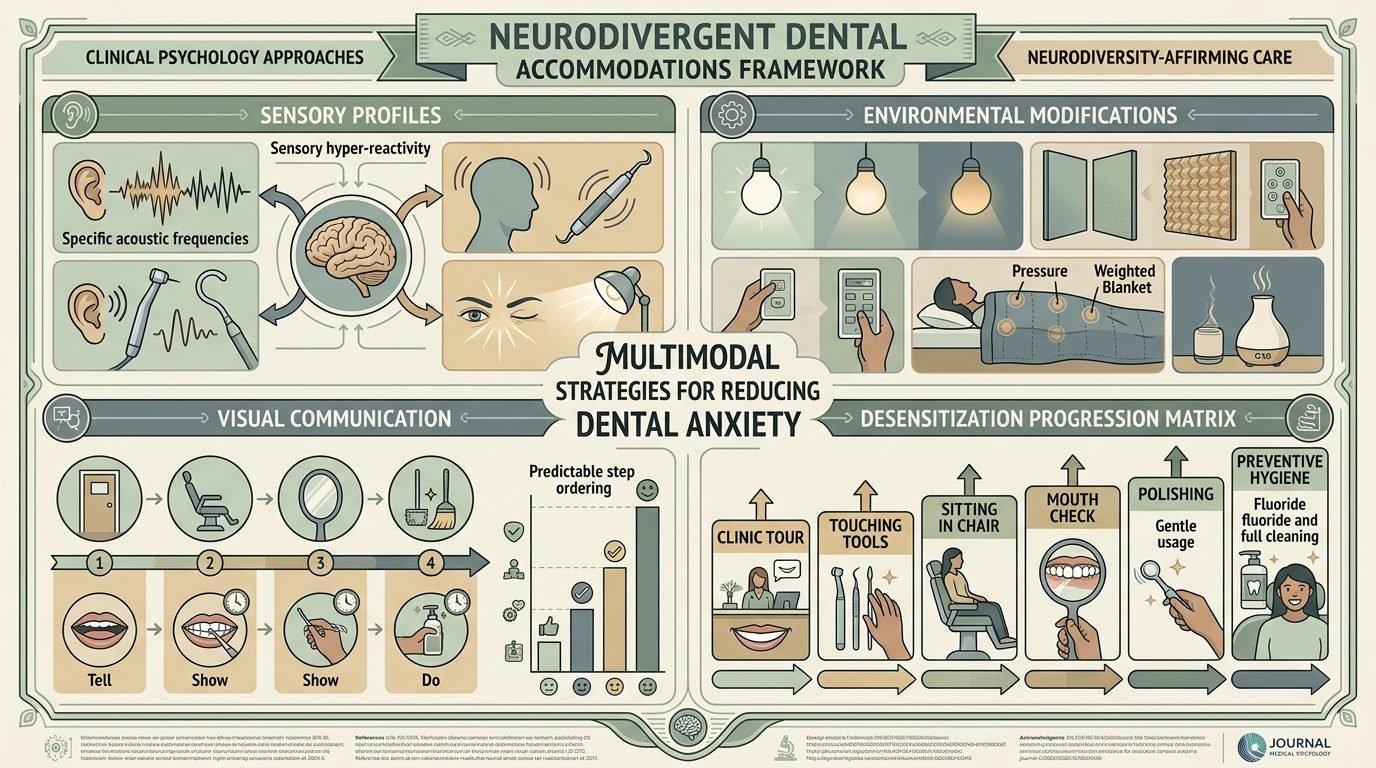
Sensory processing sensitivity co-occurs in many adults with ADHD, causing rapid sensory saturation. Standard operatory environments assault sensory thresholds: overhead lights emit piercing glare, rotary handpieces produce high acoustic frequencies, ultrasonic scalers trigger intense dentinal vibrations, and chlorhexidine solutions induce chemical taste aversion. Under this bombardment, patients experience sympathetic autonomic activation, muscle rigidity, and acute distress that clinical staff often mistake for generalized anxiety.
The Spectrum of Iatrogenic Dental Trauma and Moral Injury
Most neurodivergent adults present to modern dental clinics carrying psychological scars from childhood treatment encounters. Clinicians untrained in neurodivergence frequently used physical restraint and moralistic scolding, causing adult patients to re-experience authoritarian trauma during routine care.
This dynamic fosters severe dental shame. Adult patients internalize years of clinical criticism, feeling defective because they cannot keep basic appointments or maintain clean interproximal surfaces. Fearing clinical condemnation, they cancel follow-up visits after missing a scheduled cleaning, allowing minor restorative needs to compound into pulpal necrosis, periodontal bone loss, and extensive tooth loss. Re-establishing clinical trust requires that the dental team openly acknowledges this iatrogenic trauma, completely banishing punitive clinical commentary.
Pharmacological Realities: Stimulant Medications and Rampant Xerostomia
First-line pharmacological management for adult ADHD centers on central nervous system stimulants, primarily methylphenidate formulations and mixed amphetamine salts. These compounds increase synaptic dopamine and norepinephrine concentrations, but their peripheral sympathomimetic actions cause profound suppression of salivary gland secretions. Chronic stimulation of alpha-adrenergic receptors in salivary acinar cells produces severe resting and stimulated xerostomia. Adults taking daily stimulants exhibit dramatically reduced salivary flow rates and compromised salivary buffering capacity.
Deprived of bicarbonate ions and antimicrobial immunoglobulins, the oral cavity shifts toward a dysbiotic microenvironment. Enamel demineralization accelerates, driving aggressive cervical caries and rapid incisal chipping. Compounding this challenge, patients experiencing executive dysfunction often consume high-sugar energy beverages or acidic caffeinated drinks to counter dopaminergic slumps. The convergence of stimulant-induced hyposalivation, acidic beverage sipping, and irregular plaque control produces severe caries patterns demanding biochemical protection rather than scolding.
Operatory Accommodations: Neutralizing Sensory Overload Chairside
Modifying the physical dental operatory environment dramatically diminishes autonomic fight-or-flight reactions in neurodivergent adults. The clinical team must offer sensory adaptations immediately upon welcoming the patient to the treatment suite. Clinicians should lower overhead ambient illumination and invite patients to wear dark polarized sunglasses to eliminate light glare. Ambient dental noises should be masked by inviting patients to utilize active noise-canceling headphones connected to their personal mobile audio tracks.
Deep pressure touch stimulation significantly lowers sympathetic nervous system arousal. Providing a clinical weighted lap blanket weighing six to eight kilograms across the patient torso calms neuromuscular restlessness and promotes grounding during long restorative sessions. In addition, sensory fidget objects, such as textured silicone hand grips, provide benign physical motor outlets for involuntary kinetic energy, preventing sudden head movements during precision handpiece utilization. Strong chemical aromas should be minimized through medical-grade air filtration and elimination of scented room sprays.
Communication Strategies: Predictability, Control, and Micro-Breaks
Autonomy and predictability mitigate the panic of perceived entrapment. Clinicians must establish a non-verbal hand-raising protocol before placing retractors or rubber dams, explicitly guaranteeing that lifting the left hand produces an immediate, unconditional cessation of instrumentation. The practitioner must honor this signal without hesitation or irritation, confirming to the patient that operatory control resides firmly within their grasp.
Time blindness represents another clinical hallmark of ADHD. Sitting horizontally with dental instruments inside the oral cavity warps temporal perception, making two minutes of crown preparation feel like an eternity. Clinicians should introduce concrete verbal countdowns, announcing, “I will apply the rotary polisher for ten seconds. Ten, nine, eight…” This precise temporal bounding permits the neurodivergent brain to compartmentalize operative discomfort. Furthermore, scheduling structured ninety-second micro-breaks every ten minutes allows the patient to swallow, adjust jaw position, and release accumulated physical tension.
Home Care Regimens Engineered for Executive Dysfunction
Traditional oral hygiene instructions that mandate two minutes of mechanical brushing twice daily and nightly spool flossing consistently collapse under ADHD executive paralysis. Clinicians must engineer low-friction, habit-stacked oral hygiene systems. Recommending high-fluoride 5000-ppm sodium fluoride toothpastes counteracts stimulant xerostomia while minimizing the damage of skipped sessions. If sensory aversion to strong foaming detergents occurs, clinicians should prescribe non-foaming, SLS-free, unflavored gels.
Mechanical toothbrushes equipped with quadrant timers offload the cognitive burden of tracking brushing duration. For interdental debridement, traditional floss should be replaced by ergonomic flosser picks or water flossers placed directly inside the shower stall. Habit-stacking hygiene tasks onto automatic daily anchors, such as morning showers or evening skincare, circumvents the dopamine-depleted barrier of solitary bedtime routines. The clinical team must emphasize that twenty seconds of brushing is vastly superior to zero seconds, celebrating incremental adaptations over impossible perfectionism.
Clinical Synthesis for Neuro-Affirming Dental Teams
Humanized dental care for adults with ADHD demands transforming the dental clinic from a site of sensory distress and moral evaluation into an environment of psychological safety and biological repair. By integrating environmental sensory dampening, predictable time boundaries, and salivary replenishment strategies, clinicians neutralize the biological triggers of dental phobia. Recognizing executive dysfunction as an authentic neurological divergence preserves natural dentitions, restores patient self-worth, and builds enduring clinical alliances.
References
- Barkley, R. A. (2015). Attention-Deficit Hyperactivity Disorder: A Handbook for Diagnosis and Treatment (4th ed.). Guilford Press.
- Broadbent, J. M., et al. (2014). ADHD and dental caries in adult populations: a longitudinal cohort evaluation. Community Dentistry and Oral Epidemiology, 42(5), 433-441.
- Holloway, A., et al. (2020). Sensory processing sensitivities and dental anxiety in neurodivergent adults: clinical implications. British Dental Journal, 228(7), 521-527.
- Kooij, S. J., et al. (2019). Updated European consensus statement on diagnosis and treatment of adult ADHD. European Psychiatry, 56(1), 14-34.
- Smyth, C. A., & Braid, J. (2021). Oral health barriers in adults with neurodevelopmental conditions: a qualitative investigation. Journal of Disability and Oral Health, 22(3), 112-120.
Leave a Reply