

Frailty syndrome and systemic polypharmacy combine to create one of the most complex clinical challenges in modern geriatric oral medicine. Frailty denotes a progressive, multisystem physiological decline characterized by diminished physiological reserves, sarcopenia, unsteadiness, and heightened vulnerability to minor external stressors. Concurrently, older adults manage multiple chronic comorbidities, regularly consuming five or more daily systemic medications (polypharmacy), and frequently exceeding ten prescription drugs (hyperpolypharmacy). In this medically compromised population, traditional dental treatment plans focused on extensive restorative rehabilitation or fixed full-arch implant reconstructions consistently fail. Dental professionals must transition away from aggressive surgical paradigms toward humanized, pragmatic strategies that prioritize comfort, chewing efficiency, infection control, and oral dignity. Clinical care must be rooted in pharmacological de-prescribing coordination, salivary hypofunction mitigation, and biologically conservative minimal interventions.
Polypharmacy represents the primary biological driver of acquired salivary hypofunction in the elderly. Over four hundred commonly prescribed pharmaceutical agents induce subjective xerostomia and objective hyposalivation through competitive anticholinergic blockade or peripheral adrenergic vasoconstriction. Antihypertensives (such as beta-blockers, ACE inhibitors, and calcium channel blockers), diuretics (furosemide, hydrochlorothiazide), psychotropic agents (selective serotonin reuptake inhibitors, tricyclic antidepressants, antipsychotics), and urinary antispasmodics (oxybutynin) exert synergistic suppressive effects on salivary acinar secretions. Resting unstimulated whole saliva flow rates dropping below 0.1 milliliters per minute disrupt fundamental mucosal defense mechanisms. Salivary clearance of dietary carbohydrates and bacterial toxins slows dramatically. Without adequate bicarbonate buffering and protective histatins, mucins, and secretory immunoglobulin A, root surfaces exposed by gingival recession develop rapid, aggressive cervical and subgingival carious destruction. These leathery carious lesions encircle abutment teeth, undermining existing crown margins and leading to crown fractures down to the gingival crest.
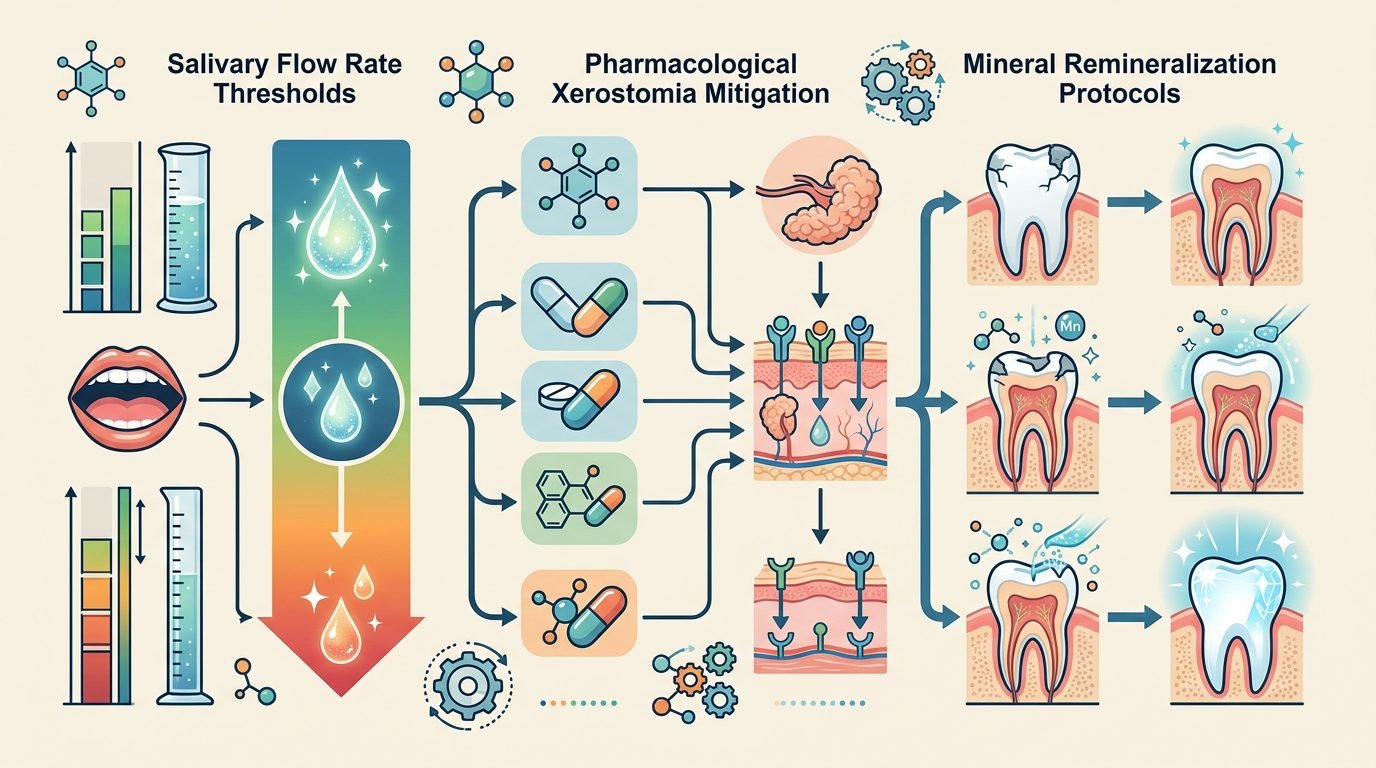
Managing medication-induced hyposalivation requires interdisciplinary communication with primary care physicians and geriatricians. Dental practitioners cannot independently alter systemic prescriptions. However, the dentist can document objective salivary measurements and formally request drug rationalization. In many instances, primary physicians can substitute offending drugs with agents exhibiting lower anticholinergic burdens, divide daily doses, or reschedule xerogenic medications to morning hours, thereby sparing vulnerable nocturnal mucosal surfaces. Chairside salivary support must be instituted immediately. Commercial salivary substitutes containing carboxymethylcellulose, porcine gastric mucins, or aloe vera provide palliative lubrication, relieving mucosal burning and facilitating swallowing during meals. Sugar-free lozenges and chewing gums formulated with xylitol stimulate residual functional parenchyma in major salivary glands, promoting endogenous bicarbonate secretion. Topical fluorides represent the primary line of mineral preservation: daily application of prescription neutral sodium fluoride toothpaste (5000 ppm) combined with quarterly professional applications of five percent sodium fluoride varnish significantly arrests root caries progression in frail patients.
Cognitive decline, hand osteoarthritis, and generalized sarcopenia directly compromise oral hygiene maintenance. When manual dexterity declines, conventional flossing and bass brushing techniques become mechanically impossible. Expecting a frail patient with severe tremor or advanced memory deficits to perform complex interdental plaque control is unrealistic and creates patient frustration. The dental team must design simplified, adapted hygiene regimens tailored to the individual’s functional status. Electric oscillating toothbrushes with custom-molded silicone grip enlargers allow patients to clean teeth with minimal wrist articulation. When self-care ceases completely, formal caregivers must be trained in compassionate, gentle oral cleansing routines. Providing caregivers with specialized three-sided toothbrushes and disposable foam swabs soaked in 0.12 percent alcohol-free chlorhexidine digluconate or cetylpyridinium chloride reduces microbial plaque load while minimizing swallowing and aspiration risks.
Prosthetic rehabilitation in frail older adults demands pragmatic simplification and realistic biomechanical expectations. Fabricating complex removable partial dentures with precision attachments or embarking on multi-implant overdentures in frail patients with salivary deficiency frequently ends in clinical failure. Without adequate saliva to generate interfacial surface tension, complete denture retention collapses, resulting in painful friction ulcers and chronic denture stomatitis caused by Candida albicans. Furthermore, diminished motor coordination makes insertion and removal of tight precision attachments nearly impossible for the patient or family caregivers. The humanized geriatric approach adopts the shortened dental arch concept, establishing stable occlusion from second premolar to second premolar. Preserving ten occluding pairs of anterior and premolar teeth provides adequate masticatory function, nutritional intake, and mandibular stability without extending restorations into difficult-to-maintain posterior molar regions.
Atraumatic Restorative Treatment (ART) and non-invasive cariostatic therapies represent standard modalities for frail elderly populations. Utilizing manual hand instruments to excavate soft, necrotic infected dentin eliminates the need for rotary drilling, aerosol generation, and local anesthetic injections. Restoring excavated cavities with high-viscosity glass ionomer cements (GICs) provides durable biocompatibility, chemical adhesion to sclerotic root dentin, and long-term fluoride release that inhibits secondary caries along adjacent enamel and cementum margins. When cavity access is restricted or systemic frailty precludes cooperative restorative seating, the application of thirty-eight percent silver diamine fluoride (SDF) provides immediate, non-invasive therapeutic intervention. The silver ions exert potent bactericidal actions against Streptococcus mutans and Actinomyces species, while fluoride remineralizes the softened dentinal matrix. Although SDF stains carious lesions dark black, frail patients and their caregivers overwhelmingly prioritize pain relief, procedural brevity, and tooth preservation over pristine cosmetic color matching.
Clinical ergonomics and appointment scheduling must align with geriatric physiological limitations. Frail patients experience significant orthostatic instability, stiff spinal curvature, and respiratory compromise. The dental chair should remain semi-upright at forty-five to sixty degrees, utilizing supportive cervical cushions and lumbar pads to accommodate kyphosis. Morning appointments, scheduled sixty to ninety minutes after breakfast and morning medications, optimize cognitive alertness and minimize afternoon fatigue. Treatment sessions must remain brief, ideally twenty to thirty minutes, preventing physical exhaustion and jaw muscular fatigue.
Aspiration pneumonia represents the most lethal systemic consequence of unmanaged oral frailty in polypharmacy patients. Sarcopenic changes in tongue musculature and pharyngeal constrictors cause silent micro-aspirations during swallowing. When saliva containing dense anaerobic biofilms, Porphyromonas gingivalis, and enteric gram-negative bacilli enters the bronchial tree, the elderly host’s suppressed pulmonary immunity cannot clear the pathogen load, resulting in life-threatening aspiration pneumonia. Comprehensive bedside plaque reduction and tongue debridement protocols conducted twice daily have been shown in hospital and long-term care trials to reduce pneumonia mortality by over thirty percent. Dental clinicians must instruct nurses and family members to position patients upright at ninety degrees during oral cleaning, utilizing suction-assisted electric toothbrushes to prevent inadvertent fluid pooling in the posterior oropharynx.
Nutritional screening and ethical boundaries shape palliative decision-making in end-of-life geriatric care. Dentists should incorporate brief chairside nutritional assessments, such as the Mini Nutritional Assessment (MNA), monitoring whether masticatory pain or loose dentures are causing involuntary weight loss and protein-calorie malnutrition. In the advanced stages of frailty and terminal decline, overtreatment becomes an ethical hazard: subjecting a dying patient to complex restorative crown preps or surgical tooth sectioning violates the principle of non-maleficence. The primary clinical mandate shifts toward palliative oral comfort, meticulous lip lubrication with lanolin, localized oral candidiasis eradication with topical nystatin oral suspension, and immediate relief of mechanical mucosal friction.
Regarding clinical philosophies, humanized geriatric dentistry recognizes that oral health success is not defined by elaborate prosthodontics, but by comfort, nutritional capability, freedom from odontogenic infection, and personal dignity. By addressing polypharmacy through physician coordination, combating xerostomia with aggressive fluoride and saliva substitutes.
Leave a Reply