

Geriatric polypharmacy in long-term care facilities induces severe iatrogenic hyposalivation, precipitating rampant root caries, mucosal friability, and aspiration pneumonia in older adults. Demographic aging has increased the proportion of nursing home residents retaining natural teeth. Managing multiple chronic illnesses, including hypertension, depression, and incontinence, exposes frail seniors to complex pharmacological regimens. Over seventy percent of institutionalized elders take five or more daily medications. These compounds exert cumulative anticholinergic effects suppressing salivary acinar secretion. Deprived of salivary buffering, fragile oral tissues break down rapidly. Preserving comfort and systemic health in dependent elders requires departing from clinic-bound procedures, establishing bedside care models, minimally invasive chemistry, and collaborative medication reviews.
Pharmacological Mechanisms: Anticholinergic Cognitive and Salivary Burden
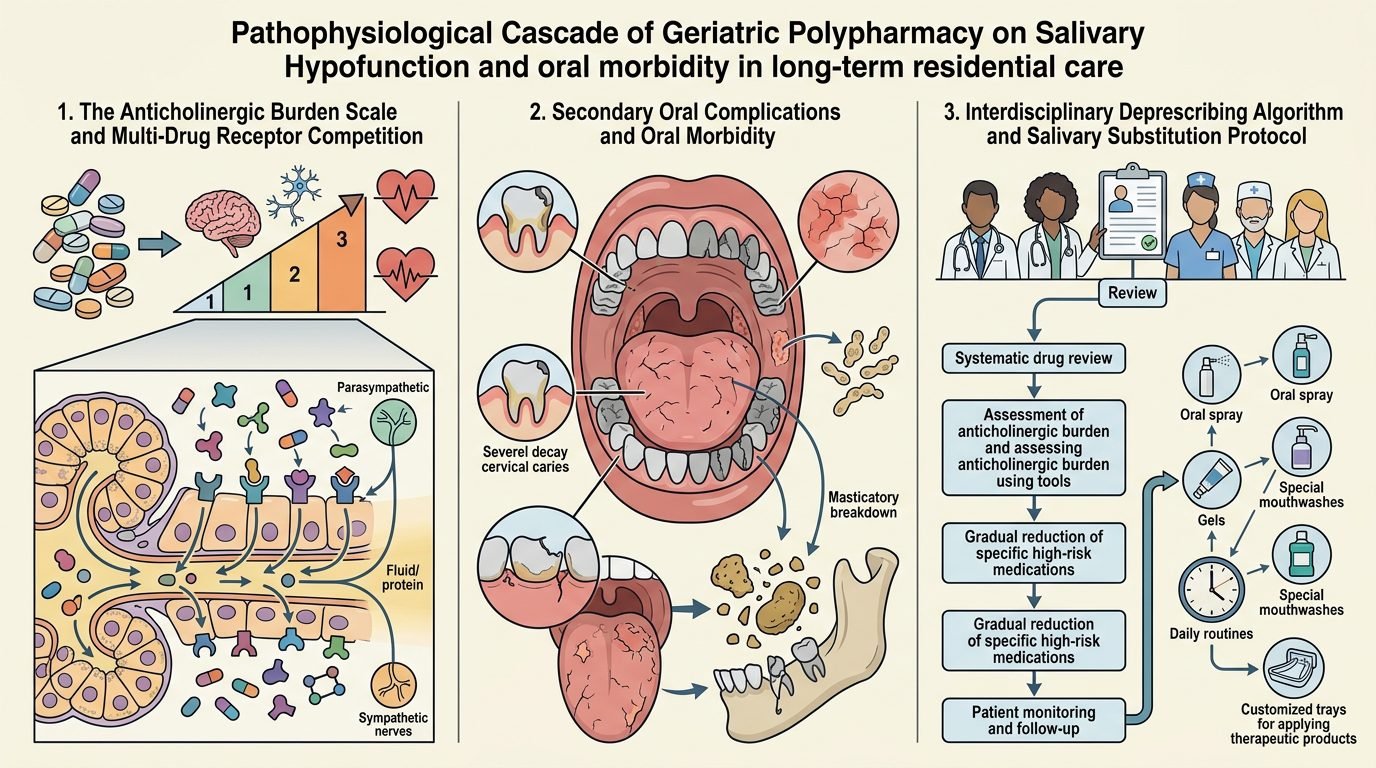
Salivary secretion is governed by autonomic parasympathetic signaling mediated through muscarinic M3 receptors on salivary acinar cells. Binding of acetylcholine to M3 receptors triggers intracellular calcium release, activating aquaporin channels that drive fluid and electrolyte transport into salivary ducts.
Geriatric pharmacotherapy frequently introduces multiple compounds that act as competitive antagonists at muscarinic acetylcholine receptors. Drugs with strong anticholinergic properties include tricyclic antidepressants, first-generation antihistamines, bladder antispasmodics, antipsychotics, and antiarrhythmics. Even medications with moderate or low individual anticholinergic activity contribute to a high cumulative Anticholinergic Cognitive and Salivary Burden (ACB) when administered concurrently. The resulting salivary hypofunction alters saliva composition: total protein concentration drops, viscosity increases, and resting salivary flow rates fall below 0.1 milliliters per minute. The oral environment shifts toward an acidic, dysbiotic state that accelerates enamel and cementum demineralization.
The Cascade of Oral Morbidity: Root Caries and Denture Stomatitis
In dentate elderly residents, chronic xerostomia triggers rapid biological destruction of exposed cervical root surfaces. Gingival recession exposes cementum and root dentin, which possess a critical demineralization pH of 6.2 to 6.7, compared to 5.5 for coronal enamel. Without saliva to deliver calcium, phosphate, and fluoride ions, aggressive multi-surface root caries encircle tooth margins within months.
Carious lesions rapidly undermine coronal tooth structure, leading to subgingival root fractures that leave retained non-vital root tips. Concurrently, edentulous and partially dentate residents wearing acrylic removable prostheses suffer from chronic denture stomatitis. Salivary deficits prevent the formation of a protective salivary film between the acrylic base and palatal mucosa, generating frictional mucosal shearing. Candida albicans penetrates microscopic acrylic porosities, forming recalcitrant biofilms that cause erythema, papillary hyperplasia, and painful burning sensations that compromise food intake and accelerate weight loss.
The Systemic Threat: Oral Biofilm and Aspiration Pneumonia
The clinical consequences of neglected geriatric oral health extend far beyond intraoral discomfort. In dependent elders suffering from neurological dysphagia, stroke sequelae, or advanced Parkinson’s disease, the oral cavity serves as the primary reservoir for respiratory pathogen colonization. Bacterial plaques on unbrushed teeth and colonized dentures harbor Gram-negative respiratory pathogens, including Pseudomonas aeruginosa, Klebsiella pneumoniae, and Staphylococcus aureus.
During sleep or swallowing, micro-aspiration of saliva laden with these virulent oral pathogens enters the lower respiratory tract. In frail seniors with diminished cough reflexes and compromised pulmonary immune clearance, micro-aspiration triggers severe aspiration pneumonia. Epidemiological investigations confirm that aspiration pneumonia is a leading cause of hospitalization and mortality among nursing home residents. Clinical trials demonstrate that implementing professional mechanical oral hygiene twice daily reduces the incidence of aspiration pneumonia by over thirty-five percent, confirming that oral decontamination is a medical intervention that preserves human lives.
Minimally Invasive Bedside Protocols: Atraumatic Restorative Treatment and SDF
Transporting frail, cognitively impaired, or bedridden elders to outpatient dental clinics generates acute physical exhaustion, psychological confusion, and cardiovascular stress. Dental teams must deliver restorative care directly at the bedside utilizing portable minimally invasive techniques that eliminate rotary dental handpieces and local anesthetic injections.
Silver diamine fluoride (SDF 38%) represents an essential non-invasive clinical modality for arresting active root caries. The silver ions exert potent antimicrobial action by disrupting bacterial cell walls and inhibiting microbial DNA replication, while the high fluoride concentration (44,800 ppm) forms fluorhydroxyapatite crystals that re-harden softened dentin. Following simple plaque debridement with cotton pellets, clinicians apply a single drop of 38 percent SDF directly to the root lesion for sixty seconds, followed by gentle blotting. Furthermore, Atraumatic Restorative Treatment (ART) utilizing hand excavators to remove soft necrotic infected dentin, paired with high-viscosity glass ionomer cements (GIC), seals cavitation defects. Glass ionomer chemically bonds to moist dentin and provides long-term fluoride release, halting caries progression without causing sensory distress.
Interprofessional Hygiene Routines and Salivary Support
Maintaining daily oral hygiene in long-term care cannot succeed without empowering certified nursing assistants and bedside care workers. Nursing aids often receive minimal formal training in oral care and face physical resistance or behavioral agitation from residents with dementia during tooth brushing.
Dental professionals must conduct hands-on bedside training, demonstrating ergonomic head-support techniques, the use of soft-bristled triple-headed toothbrushes that cleanse three tooth surfaces simultaneously, and chlorhexidine-free oral swabs. For salivary relief, clinicians must prescribe alcohol-free enzymatic mouth sprays containing lysozyme and lactoperoxidase, applied every two hours. Pure cold-pressed olive oil or pharmaceutical-grade vitamin E oil applied to labial commissures prevents painful angular cheilitis. Removable dentures must be removed nightly, brushed with neutral soap, and immersed in diluted alkaline hypochlorite solutions to eradicate fungal reservoirs.
Interprofessional Collaboration with Prescribing Physicians
Resolving xerostomia-induced oral breakdown requires direct collaboration between dental clinicians, consultant pharmacists, and geriatricians. Dental teams must document objective salivary hypofunction metrics and calculate the patient’s cumulative anticholinergic burden score.
Clinicians should participate in institutional medication review rounds, recommending pharmacological deprescribing or dose reduction for non-essential anticholinergic agents where clinically safe. Substituting xerogenic medications with alternative pharmacological classes (such as replacing sedating antihistamines with non-sedating second-generation agents, or selecting antihypertensives with lower xerogenic potential) restores residual salivary gland function. When medication substitution is impossible, prescribing sialogogues like cevimeline or pilocarpine under physician supervision stimulates functional acinar tissues, preserving residual oral defenses.
Clinical Synthesis for Geriatric Healthcare Practice
Geriatric dentistry in long-term care environments shifts the clinical definition of success from complex prosthetic perfection to systemic protection, infection control, and human dignity. By mastering silver diamine fluoride application, bedside atraumatic restorations, and interprofessional anticholinergic medication reviews, dental teams eliminate oral pain and shield institutionalized elders from life-threatening aspiration pneumonia. Delivering compassionate, biologically centered oral care honours the vulnerability of advanced age, ensuring that dependent seniors live their final years with comfort, respect, and functional dignity.
References
- Chalmers, J. M., et al. (2005). The oral health of older adults with dementia. Journal of the American Dental Association, 136(11), 1570-1578.
- Horst, J. A., et al. (2016). UCSF protocol for caries arrest using silver diamine fluoride: rationale, indications, and clinical recommendations. Journal of the California Dental Association, 44(1), 16-28.
- Sjögren, P., et al. (2008). A systematic review of the preventive effect of oral hygiene on pneumonia and respiratory tract infection in elderly people in hospitals and nursing homes. Journal of the American Geriatrics Society, 56(11), 2124-2130.
- Tan, E. C., et al. (2018). Polypharmacy, anticholinergic burden, and oral health in older people: a clinical perspective. Journal of the American Medical Directors Association, 19(8), 643-650.
- Yoneyama, T., et al. (2002). Oral care reduces pneumonia in older patients in nursing homes. Journal of the American Geriatrics Society, 50(3), 430-433.
Leave a Reply