

Rehabilitating patients paralyzed by profound dental shame and prolonged oral neglect requires structured psychological de-stigmatization, empathetic non-judgmental communication, and phased clinical re-entry protocols that separate moral guilt from biological pathology. Chronic dental avoidance frequently stems not merely from anticipatory pain, but from intense feelings of humiliation regarding deteriorated oral appearance, halitosis, and decayed dentition. When individuals avoid professional dental care for ten, twenty, or thirty years, their self-perception becomes dominated by internalized social stigma and perceived defectiveness. Fear of being chastised, ridiculed, or lectures by dental professionals reinforces the cycle of avoidance, causing patients to hide their smiles, withdraw from social relationships, and endure chronic pain in silence. Overcoming this destructive barrier demands that dental clinicians systematically eliminate judgmental verbal reprimands and establish an emotionally safe healthcare sanctuary.
The Psychosocial Cycle of Dental Shame and Social Isolation
Dental shame differs fundamentally from simple dental anxiety. While anxiety reflects conditioned fear of physical pain or bodily injury, shame constitutes an agonizing affective state concerning perceived personal unworthiness, moral failure, and loss of social acceptability. In modern societies, a clean, white, aligned smile is culturally associated with hygiene, self-discipline, and social competence.
Conversely, missing front teeth, visible coronal decay, calculus encrustations, and fetid breath are heavily stigmatized and associated with personal neglect, substance misuse, or low socioeconomic status. Individuals trapped in this cycle engage in elaborate concealment behaviors, such as covering their mouths when laughing, avoiding eye contact, speaking with rigid lips, and eating exclusively in private. Over time, chronic avoidance exacerbates dentoalveolar destruction: untreated caries leads to crown fracture, chronic pulpitis progresses to periapical osteolysis, and aggressive periodontitis causes tooth mobility. The worse the oral status becomes, the greater the dread of being exposed to professional condemnation, creating a self-perpetuating cycle of psychological isolation and biological deterioration.
The Destructive Impact of Clinical Moralizing and Reprimands
Authoritarian or moralizing communication from dental professionals represents the single greatest barrier preventing ashamed patients from completing treatment. When a dentist peers into a compromised mouth and makes exasperated remarks such as “how could you let things get this bad?” or “you have not used floss in ten years,” the patient’s worst fears of exposure and humiliating judgment are confirmed.
Such dismissive interactions activate neurobiological defense cascades, inducing autonomic withdrawal, intense facial flushing, and cognitive collapse. In psychological terms, clinical moralizing re-traumatizes the patient by positioning the clinician as an accusatory parent figure and the patient as a defective, disobedient child. The immediate consequence of such shaming is clinical dropout: the patient leaves the operatory in tears, never returns, cancels all future appointments, and resumes total avoidance for another decade. Treating these patients successfully requires clinicians to abandon paternalistic admonitions entirely, adopting unconditional clinical neutrality.
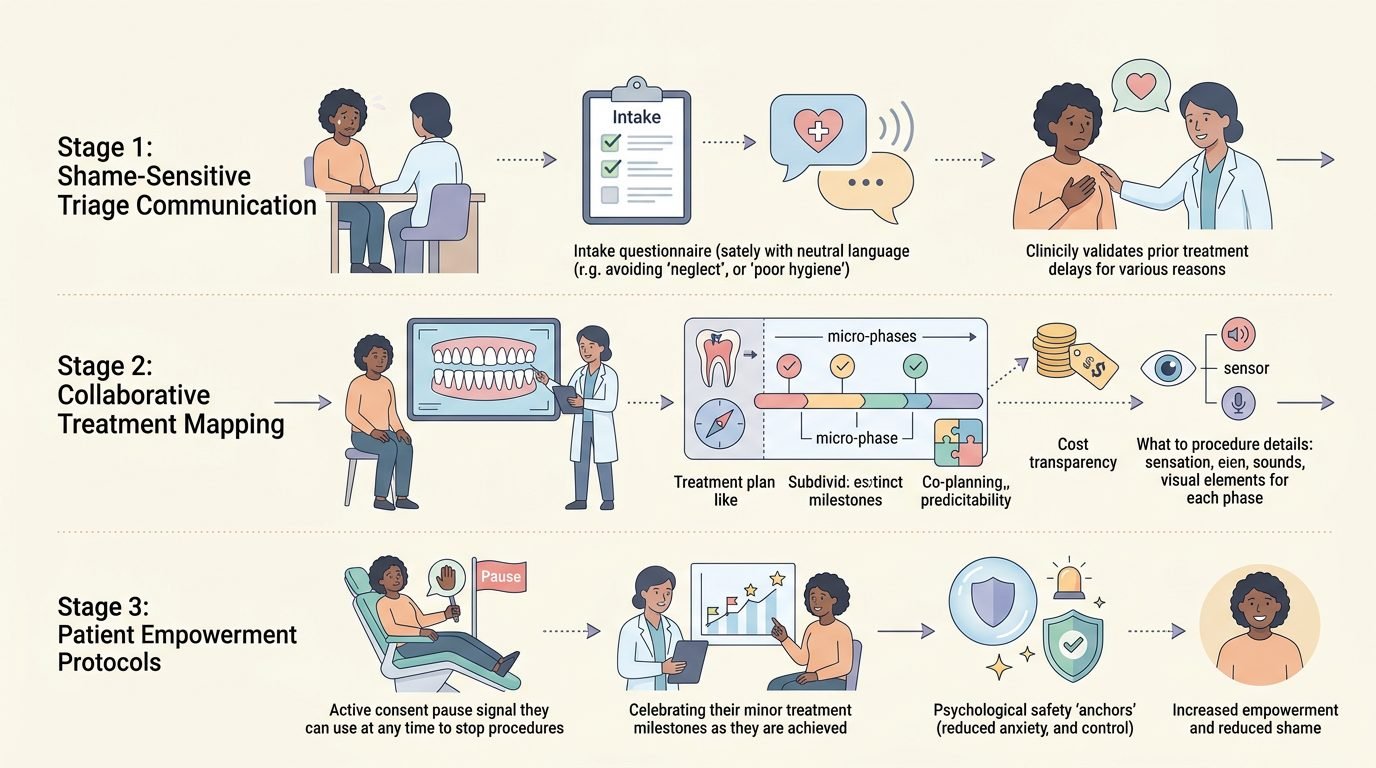
First-Contact Protocols: The Stigma-Free Consultation
The rehabilitation process begins at the initial administrative and clinical point of contact. Reception personnel must be trained to receive highly anxious, embarrassed callers with warmth and absolute neutrality, refraining from probing questions about past neglect.
The initial consultation must occur away from the dental chair in a private, neutral office setting where the patient remains fully clothed in their regular street clothes, seated eye-to-eye across a table with the clinician. The clinician opens with validating, de-stigmatizing statements: “I want to thank you for having the courage to come see us today. Many people avoid the dentist for decades for various reasons, and you are not alone. Our clinic has zero judgment here; whatever has happened in the past is behind us, and we are only focused on helping you feel comfortable moving forward.” This explicit reassurance lifts an immense psychological burden, allowing the patient to speak openly without fearing reprimands.
The Staged Intraoral Assessment: Preserving Dignity
Transitioning to physical examination must be orchestrated with extreme gentleness and continuous consent. The clinician should explain beforehand exactly what will occur: “Today, we can simply take a gentle look to see what is happening. You have complete control, and we will not perform any scraping, drilling, or painful procedures.”
When the patient is seated in the operatory, the dental team must maintain a calm, relaxed facial expression during intraoral examination. Involuntary gasps, raised eyebrows, calls to colleagues to “come look at this unusual case,” or prolonged whispering are catastrophic to the patient’s fragile composure. The practitioner narrates clinical observations in objective, descriptive biological language rather than pejorative terms, referring to “calcified deposits requiring gentle debridement” instead of “severe filth,” and “teeth with structural loss” rather than “rotten roots.” High-definition intraoral cameras should be utilized cautiously; forcing an embarrassed patient to look at magnified images of their broken teeth on a large monitor can re-trigger profound shame. Visual displays must be introduced only when the patient expresses emotional readiness.
Phased Operative Re-Entry: Immediate Dignity Restoration
The treatment plan must be structured to provide rapid psychological relief and aesthetic dignity rather than following rigid, protracted textbook sequencing. In conventional dental plans, comprehensive periodontal therapy and root canal treatments consume months before addressing visible anterior aesthetics.
For a patient paralyzed by dental shame, leaving visible anterior gaps or black broken incisors unaddressed for six months maintains psychological torment and social disability. Humanized re-entry prioritizes “social smile stabilization” during the earliest clinical appointments. Fabricating simple transitional resin bonded restorations, temporary composite veneers, or an immediate removable partial acrylic appliance within the first two visits restores smile aesthetics instantly. Looking in a mirror and seeing an intact front dentition produces profound emotional relief, boosts self-esteem, validates their courage to seek care, and cements deep treatment compliance for subsequent posterior and periodontal rehabilitations.
Long-Term Supportive Care and Transformation
Successful long-term retention of previously phobic, ashamed patients relies on continuous positive reinforcement rather than perfectionist demands. When patients present for recall appointments with biofilm on restorations, clinicians should praise their attendance before gently coaching oral hygiene: “You did wonderful by coming in today. Let us work together on this back area.”
By shifting clinical paradigms from authoritarian scolding to trauma-informed, shame-free partnership, dental professionals do far more than restore teeth. They liberate human beings from years of chronic guilt, dissolve social isolation, and restore basic self-respect, demonstrating that empathy is the ultimate clinical instrument in comprehensive restorative dentistry.
References
- Armfield, J. M. (2010). Towards a better understanding of dental anxiety and fear: cognitions, behavioral avoidance, and the cognitive vulnerability model. Journal of Anxiety Disorders, 24(7), 787-797.
- Beaton, L., et al. (2014). Why are people afraid of the dentist? Observations and explanations from dentally anxious adults. British Dental Journal, 216(1), E2.
- De Jongh, A., et al. (2005). Psychological treatments for dental anxiety: a review. Journal of the American Dental Association, 136(9), 1279-1285.
- Liddell, A., & Locker, D. (1997). Gender and age differences in attitudes to dental pain and dental control. Community Dentistry and Oral Epidemiology, 25(4), 314-318.
- Raja, S., et al. (2015). Trauma-informed care in healthcare: an overview for oral health providers. Compendium of Continuing Education in Dentistry, 36(9), 674-681.
Leave a Reply