

Oral care in palliative oncology and hospice care serves as a key determinant of patient dignity, comfort, and communication during the final stages of life. When medical goals shift toward symptom relief, oral maintenance is frequently neglected by overwhelmed care teams. Terminal malignancy, organ failure, and palliative pharmacotherapy induce rapid oral breakdown. Terminally ill patients suffer from xerostomia, thick mucosal encrustations, candidiasis, and painful ulcerations that make speech, swallowing, and rest agonizing. Palliative dentistry redefines clinical priorities: restorative perfection yields to gentle atraumatic debridement, mucosal hydration, targeted analgesia, and emotional reassurance preserving human dignity.
The Pathological Spectrum of the Dying Oral Cavity
The oral environment of patients receiving end-of-life care undergoes profound dysregulation driven by pharmacotherapy, nutritional depletion, and physiological dehydration. Palliative sedation and opioid analgesics, such as morphine and fentanyl, possess strong anticholinergic properties that paralyze salivary gland acinar secretion. Concurrently, loop diuretics, antiemetics, and continuous supplemental oxygen therapy through nasal cannulae or facial masks dehydrate oral tissues. Patients quickly transition from mild hyposalivation to complete xerostomia.
Without saliva, the oral cavity loses lubricating mucins, antimicrobial histatins, and neutralizing bicarbonate ions. Epithelial surfaces dry out and shed, forming dark crusts composed of dried mucus, cellular debris, and clotted blood across the hard palate, tongue, and gingival margins. Severe halitosis develops, generating distressing olfactory barriers that cause relatives and caregivers to pull away, inadvertently isolating the dying individual. Opportunistic infections flourish; oral candidiasis presents as painful pseudomembranous plaques or inflamed erythematous patches rendering the mucosa hypersensitive to touch and air exposure.
Shifting the Clinical Paradigm: Comfort over Intervention
Traditional dental philosophy revolves around preservation, mechanical restoration, and periodontal stabilization. In terminal hospice settings, adhering to standard restorative metrics is clinically inappropriate. Imposing ultrasonic scaling, rotary burs, or complex extractions on a hemodynamically unstable, cachectic, or thrombocytopenic patient inflicts needless pain and provokes uncontrollable hemorrhage.
The palliative dental paradigm assesses every proposed action through a strict quality-of-life filter: Does this intervention directly relieve physical suffering, restore speech, or ease family connection? If the answer is negative, the procedure is withheld. Palliative clinicians replace aggressive mechanical debridement with gentle biochemical cleansing and continuous mucosal lubrication. The objective is never a plaque-free dentition, but rather a clean, hydrated, pain-free oral cavity that allows the patient to rest peacefully and converse with loved ones without distressing oral dryness.
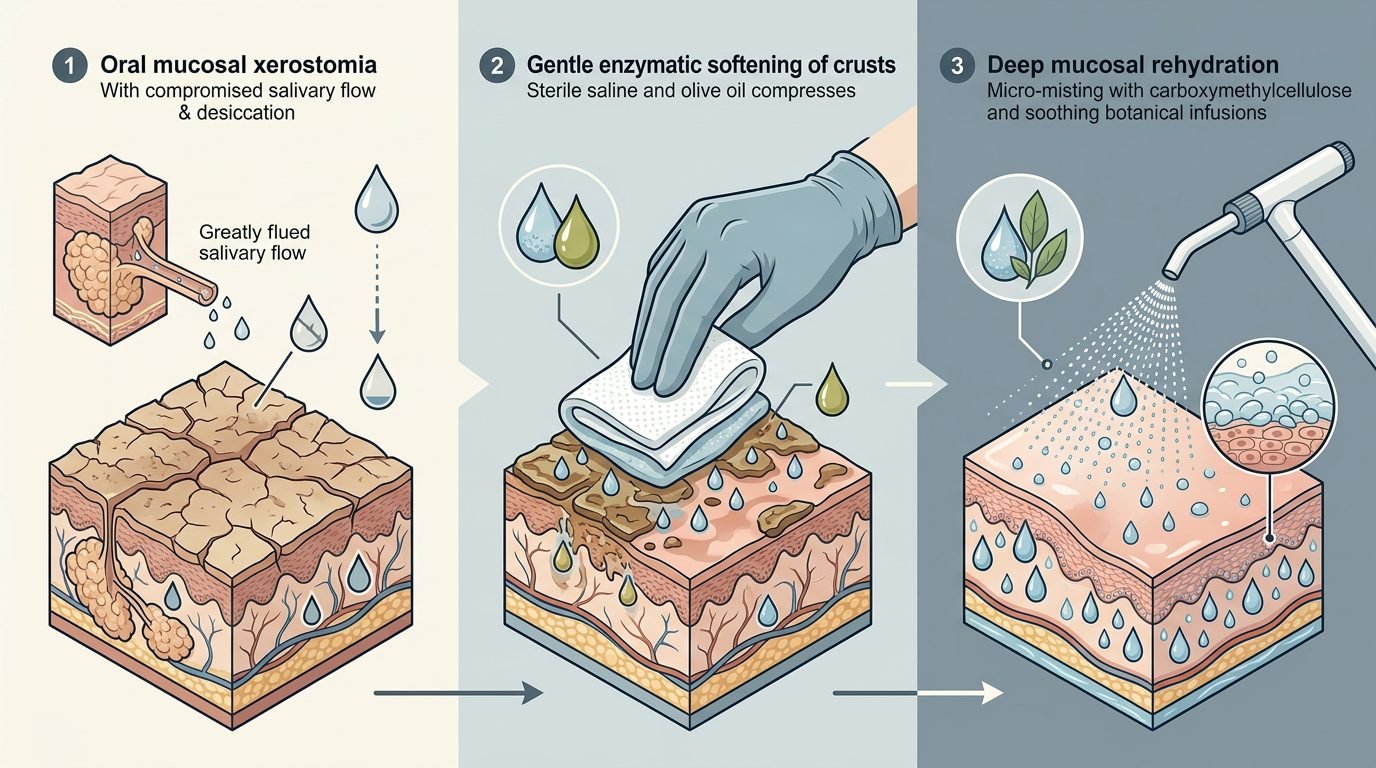
Clinical Protocol: Atraumatic Debridement and Crust Management
Removing thick, desiccated oral crusts requires gentle atraumatic techniques to prevent mucosal tearing and profuse bleeding. Standard disposable lemon-glycerin swabs must never be utilized; glycerin acts as a desiccant that accelerates tissue dehydration, while citric acid burns denuded mucosa and erodes residual enamel. Coarse foam swabs must also be handled with extreme gentleness, as friable tissues can tear if rubbed vigorously.
The clinical team softens encrustations prior to removal by coating them with sterile saline compresses or food-grade cold-pressed olive oil for ten to fifteen minutes. Once softened, crusts are lifted using ultra-soft surgical brushes or silicone finger brushes saturated with warm saline. For tenacious palatal crusting, a diluted sodium bicarbonate oral rinse (one half-teaspoon in 250 milliliters of warm sterile water) gently dissolves thick deposits without stinging sensitive ulcerations. Debridement must proceed in gentle stages, respecting patient fatigue and stopping if discomfort appears.
Targeted Management of Xerostomia, Candidiasis, and Mucosal Pain
Managing terminal xerostomia requires frequent, scheduled interventions delivered around the clock. Commercial alcohol-containing mouthwashes are contraindicated due to chemical burning and worsening dryness. Clinicians should establish a bedside protocol where caregivers mist the oral cavity every twenty to thirty minutes using a fine-spray atomizer containing sterile water, neutral artificial saliva with carboxymethylcellulose, or diluted chamomile infusions.
Lip care demands continuous protection. Petroleum jelly should be avoided in patients receiving supplemental oxygen due to combustion risks and lipid aspiration pneumonia hazards; water-soluble lubricants, pure olive oil, or vitamin E oil should be applied frequently to prevent labial fissures. When oral candidiasis manifests, systemic fluconazole represents the preferred treatment if the patient can swallow, as topical nystatin suspensions contain high sugar concentrations that promote acidity. For localized mucosal pain, compounding pharmacists prepare soothing suspensions combining diphenhydramine and viscous lidocaine, applied topically before family visits or fluids.
Preserving Communication, Swallowing, and Sensory Connection
The oral cavity represents the physical portal for human communication, emotional expression, and sensory enjoyment. When oral tissues become desiccated and glued together by dried secretions, patients lose the ability to articulate words clearly, generating acute psychological frustration and feelings of helplessness during their final days. Lubricating the tongue, buccal mucosa, and lips immediately restores articulation and phonetic ease, allowing patients to express last wishes and exchange heartfelt farewells with relatives.
Sensory oral stimulation also offers deep emotional solace. When patients can no longer tolerate solid food or swallow liquid meals safely, applying small drops of beloved flavors (such as brewed coffee, sweet fruit juices, or favorite wines) via moistened foam sponges onto the dorsal surface of the tongue stimulates neural taste pathways and evokes comforting life memories. This gentle sensory nourishment restores pleasure without inducing aspiration pneumonia, transforming oral care into an intimate ritual of human empathy.
Training and Supporting Hospice Nursing Staff and Family Caregivers
Because dental specialists cannot remain continuously at the bedside of every dying patient, the primary responsibility for maintaining oral comfort falls upon hospice nursing teams and family caregivers. Palliative dental professionals must assume active educational roles, crafting clear, written bedside oral care pathways and demonstrating hands-on techniques directly at the patient bedside.
Caregivers frequently feel anxious about performing oral hygiene on an unresponsive or semi-conscious relative, fearing they might cause choking or severe pain. Demonstrating how to elevate the patient head, utilize low-volume suction sponges, and gently moisten mucosal folds dispels fear and empowers families. Enabling loved ones to participate in comforting mouth care transforms a medical task into an act of tender family devotion, comforting both the patient and the grieving relatives.
Clinical Synthesis for Palliative Dental Medicine
Palliative oral medicine embodies the purest expression of healthcare: relieving suffering and upholding human dignity when a cure is no longer attainable. By replacing mechanical aggression with compassionate hydration, meticulous crust softening, and targeted analgesia, dental practitioners restore speech, soothe pain, and support dying patients with empathy. Embracing end-of-life oral care as an essential human right ensures that every patient leaves this world treated with gentleness, comfort, and profound professional respect.
References
- Chen, L. L., et al. (2018). Oral health and quality of life in palliative care patients: a systematic review. Journal of Pain and Symptom Management, 56(4), 621-634.
- Davies, A., et al. (2020). MASCC/ISOO clinical practice guidelines for the management of xerostomia in palliative cancer patients. Supportive Care in Cancer, 28(2), 651-662.
- Mercadante, S., et al. (2015). Palliative oral care in advanced cancer patients: evidence-based recommendations. Current Opinion in Oncology, 27(4), 312-318.
- Wiseman, M. (2000). The treatment of oral problems in the palliative care patient. Journal of the Canadian Dental Association, 66(9), 492-496.
- Zimmermann, C., et al. (2021). The neglected oral cavity in end-of-life care: an interdisciplinary call to action. BMJ Supportive & Palliative Care, 11(3), 289-296.
Leave a Reply