

Pediatric dental phobia represents a complex developmental behavioral disorder that compromises preventive oral care and initiates lifelong healthcare avoidance when mismanaged. Unlike adult dental apprehension, which is mediated by mature cortical cognition, pediatric fear originates in primitive limbic defense mechanisms triggered by unfamiliar olfactory, acoustic, and tactile stimuli. Young children lack the neurological maturity required to conceptualize preventive interventions abstractly; instead, they interpret supine physical positioning, bright operatory lights, and metallic instruments entering their oral cavity as acute predatory violations. The historical reliance on coercive physical restraint or authoritative intimidation produces lasting psychological trauma, heightening autonomic reactivity in future clinical encounters. Contemporary humanized pediatric dentistry replaces coercive practices with evidence-based behavioral de-escalation protocols, utilizing structured sensory desensitization, precise linguistic framing, and strategic parental management to establish physiological safety and long-term coping resilience.
The Neurodevelopmental Architecture of Early Childhood Fear
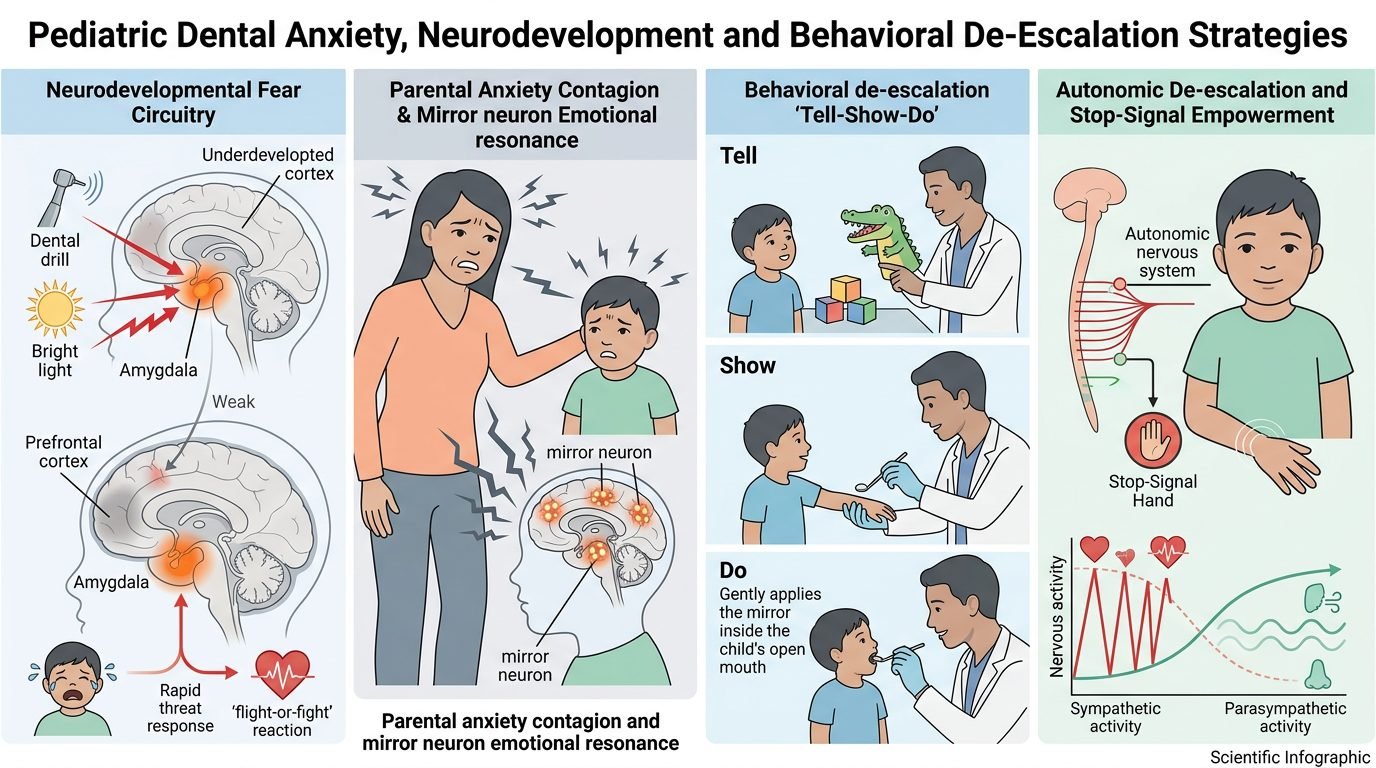
In pediatric patients aged three to eight years, the prefrontal cortex exhibits incomplete myelination and immature executive inhibitory control over subcortical structures. When a young child enters a dental clinic, sensory inputs are routed directly through the thalamus to the basolateral amygdala without extensive prefrontal dampening. High-frequency acoustic vibrations from dental handpieces, the pungent aroma of volatile acrylics or cements, and the sudden loss of upright visual orientation trigger instantaneous autonomic sympathetic survival circuits.
This rapid neurological activation initiates an uninhibited freeze, flight, or fight behavioral sequence. Children manifest acute distress through uncooperative motor flailing, ear-piercing vocalizations, clamped jaws, or complete catatonic withdrawal. Clinicians who misinterpret these unconditioned survival reflexes as deliberate defiance frequently resort to stern disciplinary commands or forceful physical immobilization. Such punitive measures cause intense surges in circulating catecholamines and cortisol, etching indelible traumatic fear engrams within the hippocampus that persist into adulthood as chronic dentophobia.
Interpersonal Neurobiology and Parental Anxiety Contagion
A primary, yet frequently underestimated, etiology of pediatric dental terror is the subconscious transmission of fear from anxious parents. Human infants and young children possess highly active mirror neuron systems and specialized neural resonance networks that continuously scan primary caregivers for non-verbal signals of environmental safety or threat. When an anxious parent sits in the operatory chairside, subtle maternal or paternal autonomic indicators, such as rapid thoracic breathing, white-knuckled fist clenching, micro-tremors, or an apprehensive facial posture, are detected by the child within milliseconds.
Through this automatic emotional contagion, the parent’s autonomic arousal is mapped directly onto the child’s nervous system, elevating the child’s baseline heart rate and triggering procedural terror before the clinician even introduces an instrument. Clinical trials indicate that pediatric distress scores correlate more strongly with parental dental fear scales than with the child’s own prior dental pain history. Humanized clinical protocols address this interpersonal dynamic directly, coaching parents before appointments to maintain calm postural neutrality or establishing structured chaperone observation boundaries outside the direct sightline of the patient.
The Tell-Show-Do Protocol and Cognitive Desensitization
The Tell-Show-Do technique remains the foundational behavioral desensitization strategy in pediatric operatory care. Operating through progressive hierarchical exposure, the protocol methodically eliminates fear of the unknown by familiarizing the child with each instrument across sensory modalities before intraoral introduction. In the Tell phase, the practitioner describes the upcoming action utilizing child-friendly, non-threatening, metaphoric vocabulary, carefully avoiding words such as hurt, needle, prick, drill, or pain.
In the Show phase, the clinician demonstrates the mechanical function of the instrument on an external, non-threatening object, such as the child’s fingernail, a soft plush toy, or the operator’s gloved hand. For instance, an air-water syringe is demonstrated as a magical water gun that washes teeth, allowing the child to feel the gentle cool spray on the back of their hand. Only after the child exhibits relaxed physiological indicators does the clinician proceed to the Do phase, executing the identical intraoral step with gentle precision. Maintaining absolute concordance between what was demonstrated and what is performed solidifies clinical credibility and dispels procedural dread.
Linguistic Engineering and Honest Metaphoric Communication
Humanized pediatric management demands precise linguistic discipline. Deceptive falsehoods, such as assuring a child that an injection will not be felt followed immediately by an unbuffered needle puncture, destroy clinical rapport permanently. Once a child experiences betrayal by a healthcare provider, future cooperation becomes impossible. Instead, practitioners utilize honest, non-threatening sensory descriptions that prepare the child’s nervous system without inducing panic.
Local anesthesia is reframed as sleepy water applied with a tiny magical wand to put the tooth to sleep so it does not feel cold water during cleaning. Rubber dam isolation becomes a protective raincoat that keeps teeth dry and prevents water from tickling the throat. Slow-speed prophylactic handpieces are introduced as electric toothbrushes that tickle and polish enamel. This metaphoric framing engages the child’s imaginative capacity, transforming threatening medical hardware into predictable, benign play artifacts.
Agency, Choice Architecture, and Autonomic De-Escalation
Loss of bodily autonomy represents the core existential fear experienced by children in dental chairs. Re-establishing personal control serves as a powerful psychological antidote to procedural anxiety. Clinicians should establish an explicit non-verbal stop signal early in the appointment: raising the left hand toward the ceiling immediately pauses all clinical activity. The operator must honor this signal instantaneously every time it is raised, even if the clinician is seconds away from completing a restorative step. Experiencing absolute bodily sovereignty dissolves autonomic fight-or-flight mobilization.
Additionally, providing controlled micro-choices throughout the appointment engages prefrontal decision-making circuits, fostering active cooperation. Offering the child simple micro-choices fosters autonomy without compromising clinical workflows. Combined with voice control, characterized by a calm, melodic, low-frequency vocal cadence, this structured empowerment down-regulates pediatric sympathetic tone, converting a potentially terrifying ordeal into an empowering mastery experience.
Long-Term Health Impacts of Compassionate Pediatric Dentistry
The behavioral patterns established during initial pediatric dental encounters cast long shadows across an individual’s lifetime health trajectory. Coercive, traumatic visits instill avoidance habits that lead to untreated adult caries, severe periodontal destruction, and systemic health complications. Conversely, patient-centered behavioral de-escalation cultivates resilient, confident dental patients who approach oral healthcare with curiosity and trust.
Clinicians who master affective communication safeguard both physical dentition and psychological well-being. Investing clinical time into unhurried desensitization yields profound dividends in cooperation.
References
- Klingberg, G., & Broberg, A. G. (2007). Dental fear/anxiety and dental behaviour management problems in children and adolescents: a review of prevalence and concomitant factors. International Journal of Paediatric Dentistry, 17(6), 391-406.
- Wright, G. Z., & Kupietzky, A. (2014). Behavior Management in Dentistry for Children. John Wiley & Sons, 45-68.
- Townend, E., et al. (2000). The role of parental anxiety in the development of dental anxiety in children. British Dental Journal, 189(1), 31-34.
- Armfield, J. M. (2010). Towards a better understanding of dental anxiety and fear: cognitions, behavioural principles and the role of the dentist. Australian Dental Journal, 55(3), 249-258.
- Appukuttan, D. P. (2016). Strategies to manage patients with dental anxiety and dental phobia: literature review. Clinical, Cosmetic and Investigational Dentistry, 8, 35-50.
Leave a Reply