

Early childhood dental experiences exert permanent epigenetic and behavioral effects on healthcare compliance throughout adult life. Pediatric patients subjected to unmitigated pain, coercive physical restraint, or aggressive clinical pacing develop profound iatrogenic dental phobias. Traditional pediatric management models historically prioritized rapid clinical completion over emotional safety, frequently utilizing mechanical stabilization boards or forceful mouth props. Modern developmental neuroscience reveals that forceful restraint under acute terror induces neurotoxic cortisol cascades that impair hippocampal maturation and consolidate lifelong medical avoidance. Humanized pediatric dentistry replaces coercive paradigms with neurobiologically grounded behavioral guidance, sensory pacing, and active memory reconsolidation protocols. Respecting the developing child autonomic nervous system prevents iatrogenic trauma while establishing lifelong oral health competence.
Neurodevelopmental Vulnerability and Associative Fear Conditioning
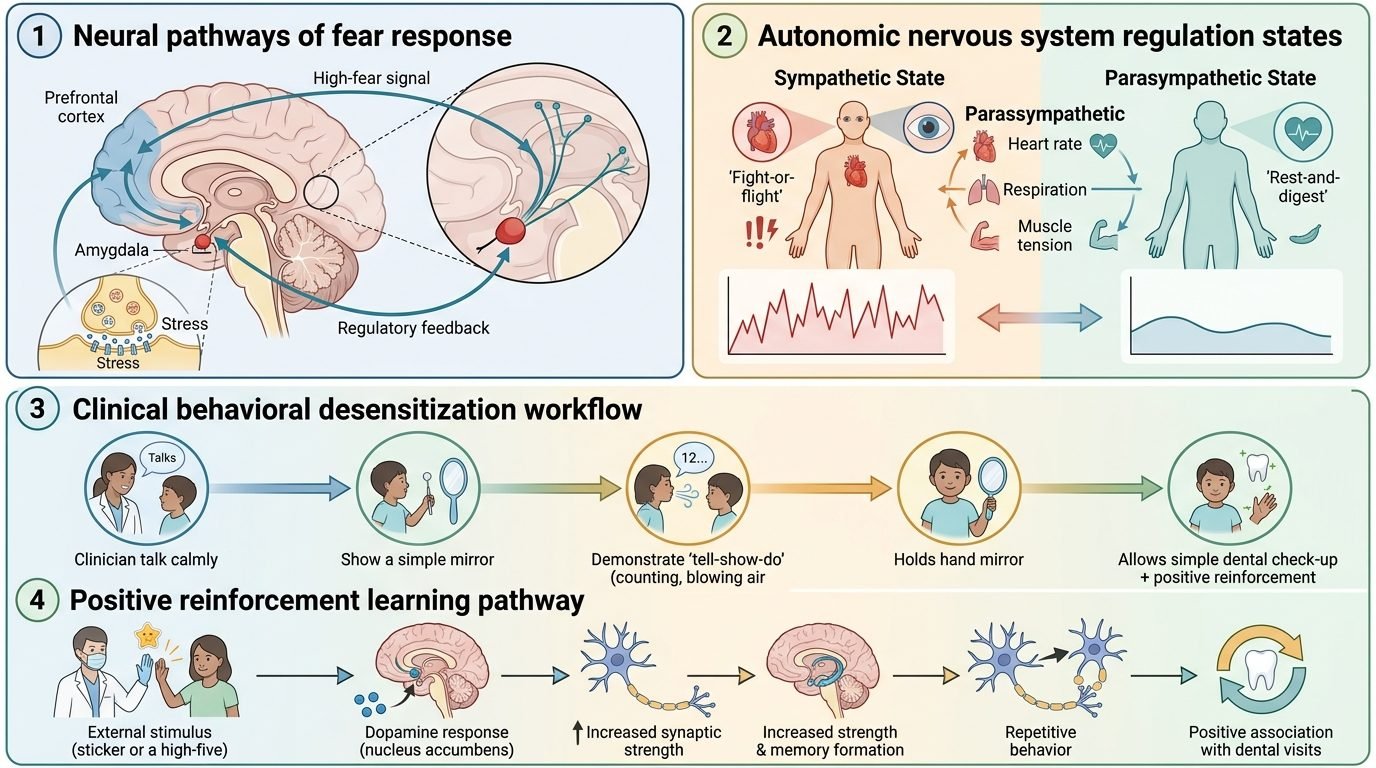
The pediatric central nervous system exhibits heightened plasticity alongside immature prefrontal regulatory circuits. The amygdala matures significantly earlier than the orbitofrontal and dorsolateral prefrontal cortices responsible for cognitive reappraisal and affective suppression. When a young child experiences unexpected sharp pain, such as an unbuffered alveolar injection, the basolateral amygdala forms indelible Pavlovian associations. High-decibel rotary noises, medicinal scents, and white clinical coats become conditioned stimuli that trigger involuntary sympathetic survival responses.
During acute terror, the hypothalamus releases corticotropin-releasing hormone, driving adrenal secretion of massive glucocorticoid surges. Elevated cortisol levels bind to high-density glucocorticoid receptors in the developing hippocampus. In extreme distress, excessive glucocorticoids induce dendritic retraction and impair neurogenesis within the dentate gyrus. Far from learning to tolerate dentistry, restrained children experience toxic neuroendocrine stress that cements dental environments as mortal survival threats. Conditioned defensive responses become automated, manifesting in future appointments as autonomic hyperarousal, reflexive physical thrashing, and profound anticipatory nausea. Chronic stress responses established in early childhood can persist indefinitely throughout adult life.
The Fallacy of Coercive Physical Restraint
Mechanical immobilization devices, colloquially termed papoose boards, have historically been justified as protective measures to prevent accidental bur lacerations. However, clinical and psychological evaluations demonstrate that forceful physical restraint induces profound psychological harm without fostering patient cooperation. When a terrified child is strapped down and immobilized, active escape behaviors fail, precipitating an immediate shift from sympathetic fight-or-flight into dorsal vagal freeze states. The child may fall eerily silent or cease crying, a response that insensitive clinicians misinterpret as behavioral compliance.
In reality, this frozen silence represents profound traumatic dissociation, characterized by extreme bradycardia, peripheral vasoconstriction, and psychic helplessness. Psychological follow-up studies reveal that children subjected to coercive mechanical restraint exhibit significantly higher rates of sleep disturbances, separation anxiety, generalized medical avoidance, and post-traumatic stress symptoms. Contemporary ethical guidelines in pediatric healthcare increasingly view routine physical restraint for non-emergency elective restorative procedures as clinically counterproductive and ethically unacceptable. Humane practice demands behavioral desensitization, inhalation sedation, or general anesthesia when extensive care is unavoidable. Protecting the vulnerable pediatric psyche must always supersede procedural speed or clinic scheduling pressures.
Memory Reconsolidation and the Post-Treatment Interoceptive Window
Neuroscience demonstrates that newly formed or retrieved memories remain labile and susceptible to modification for a brief window following clinical events. Memory reconsolidation theory reveals that when a fear memory is retrieved, protein synthesis inhibitors or competing positive affective inputs can rewrite the emotional valence of that memory. Clinicians can harness this reconsolidation window by systematically engineering the final five minutes of every pediatric clinical visit.
The peak-end rule in behavioral psychology dictates that human memory evaluates experiences based on their peak intensity and how they conclude, rather than total procedural duration. Even if a restorative procedure involved moments of discomfort, concluding the session with an engaging, painless, and rewarding activity rewrites the episodic summary stored in long-term memory. Letting the child control a harmless air-water syringe to clean a model, engaging in play, and offering genuine praise for specific milestones restructures the neurobiological narrative. The child leaves the clinic with positive affective dopaminergic signaling that dampens amygdalar fear traces. Over time, these positive neurological associations replace instinctual dread with confident engagement, fostering robust emotional coping during future appointments.
Graduated Desensitization and Pediatric Communication Frameworks
Predictable cooperation depends on graduated, cognitive-stage-appropriate behavioral shaping. The classical tell-show-do technique remains effective when paired with strict clinical pacing and physiological monitoring. The clinician first describes the procedure in metaphorical, non-threatening language: the rotary instrument becomes a gentle tooth polisher, while topical anesthetic becomes sleepy jelly. The show phase introduces the sensory stimulus in an extracranial location, allowing the child to touch the vibrating handpiece with a fingernail. Only after the child validates safety through tactile exploration does the clinician proceed to intraoral execution.
Preserving the child perceived autonomy prevents panic-driven behavioral escalations. Clinicians should establish transparent, non-retractile stop signals, such as lifting a thumb or holding a brightly colored buzzer. The moment the signal activates, the practitioner must stop instantly, praising the child for using their signal effectively. Allowing minor choices, such as selecting eyewear colors, holding the suction tip, or choosing music tracks, recruits prefrontal engagement and diminishes limbic panic cascades. Empowering the child transforms passive victimization into collaborative teamwork. Children who feel heard and respected develop healthy coping strategies that prevent dental phobia from metastasizing into adulthood.
Institutional Transformation and Family-Centered Care
Creating an atraumatic pediatric practice requires comprehensive environmental and philosophical adaptation. Operatory aesthetics should incorporate warm lighting, acoustic baffling, and visual distractions on ceilings to redirect attentional focus away from instruments. Clinical attire should be colorful and non-intimidating, avoiding stark clinical barriers that evoke hospitalizations. Parents should remain chairside as supportive emotional co-regulators, except in rare instances where parental anxiety actively destabilizes the child autonomic state.
Training dental auxiliaries in developmental psychology and emotion-coaching techniques ensures seamless communication across the entire practice. When clinicians invest time into building authentic trust during early preventative visits, restorative emergencies become rare and manageable. Humanized pediatric dentistry prioritizes the child psychological integrity equally with their dental restorations, building confident, cooperative patients who value healthcare throughout their adult lives. Eradicating coercive restraint and instituting empathetic behavioral pacing protects the neurodevelopmental trajectory of young patients, elevating the practice of pediatric oral healthcare into an authentic model of compassionate clinical excellence.
References
- Armfield, J. M., & Heaton, L. J. (2013). Management of fear and anxiety in the dental clinic: a review. Australian Dental Journal, 58(4), 390-407.
- Kagan, J., Reznick, J. S., & Snidman, N. (1987). The physiology and psychology of behavioral inhibition in children. Child Development, 1459-1473.
- Kahneman, D. (2011). Thinking, Fast and Slow. Farrar, Straus and Giroux.
- Nadel, L., Hupbach, A., Gomez, R., & Newman-Smith, K. (2012). Memory formation, consolidation and transformation: the evolving role of the hippocampus. Frontiers in Behavioral Neuroscience, 6, 85.
- American Academy of Pediatric Dentistry. (2020). Behavior guidance for the pediatric dental patient. The Reference Manual of Pediatric Dentistry, 306-324.
Leave a Reply