
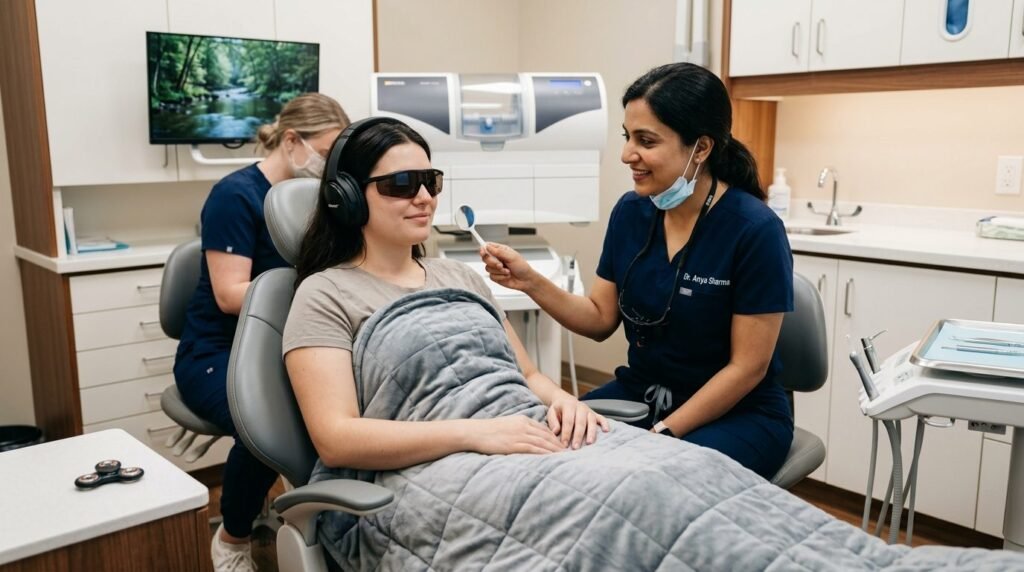
Adult neurodivergent individuals, including those diagnosed with Attention-Deficit/Hyperactivity Disorder and Sensory Processing Sensitivity, experience severe sensory overload during routine dental treatment. Standard dental operatories concentrate an overwhelming volume of sensory inputs that breach neurological filtering capacities. While neurotypical central nervous systems suppress non-threatening sensory noise automatically, neurodivergent sensory processing networks lack robust thalamic gating mechanisms. Fluorescent lighting flickers, high-pitched rotary handpiece harmonics, chemical odors of volatile monomers, and intrusive tactile manipulations flood sensory cortices simultaneously. Overwhelmed patients exhibit involuntary autonomic defense reactions, often mischaracterized by dental practitioners as behavioral uncooperativeness or irrational anxiety. Implementing systematic sensory modifications creates an accessible clinical environment that prevents neurological dysregulation, lowers physiological distress, and preserves therapeutic trust.
Thalamic Gating Deficits and Sensory Gating Neurobiology
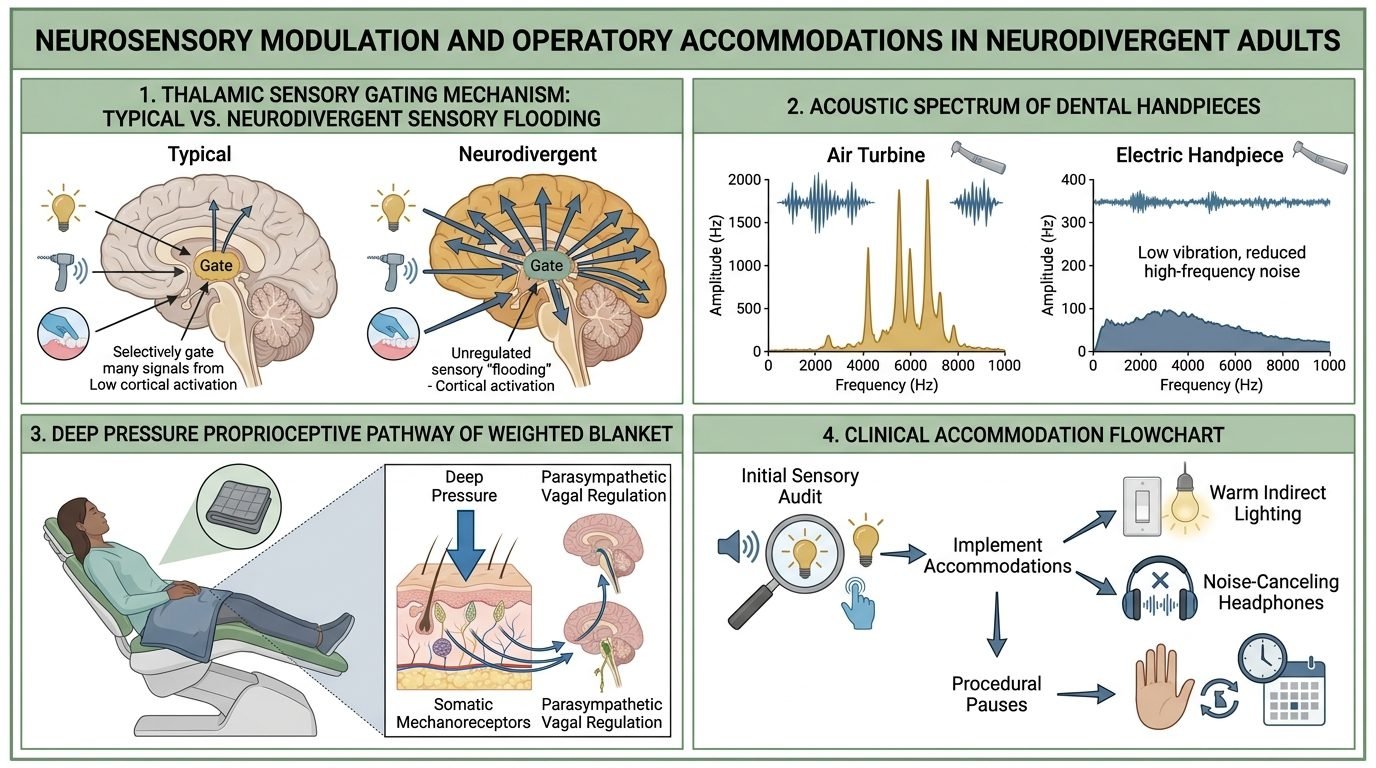
Sensory processing depends on the thalamus acting as a central relay station that filters afferent signals before sending them to higher cortical processing centers. In neurodivergent brains, deficits in sensorimotor gating impair the attenuation of repetitive sensory stimuli. Electrophysiological studies evaluating prepulse inhibition and auditory evoked potentials, such as the P50 suppression wave, demonstrate reduced sensory dampening in neurodivergent individuals. A dental operatory presents an uninterrupted onslaught of unmitigated sensory data that continuously resets the reticular activating system.
The visual environment poses an immediate sensory challenge. Overhead fluorescent tubes and light-emitting diode fixtures emit imperceptible high-frequency flickers and cool-temperature blue wavelengths. Neurodivergent individuals frequently experience this visual stimulation as visual glare, eye fatigue, and sensory exhaustion. When the high-intensity dental operatory spotlight is directed at the oral cavity, peripheral retinal exposure triggers acute visual overstimulation, forcing the autonomic nervous system toward defensive sympathetic hyperarousal.
Acoustic Hyperacusis and Rotary Instrumentation Harmonics
Acoustic processing vulnerabilities constitute a primary source of operative distress. High-speed pneumatic air turbines operate at rotational velocities exceeding 300,000 revolutions per minute, producing high-frequency acoustic harmonics between 3,000 and 6,000 Hertz. These frequencies coincide with the human ear zone of highest resonance and sensitivity. For individuals with sensory defensiveness, these acoustic harmonics are perceived not as background noise, but as piercing, physical pain inside the cranium.
Furthermore, ultrasonic scalers and piezoelectric instruments generate high-frequency micro-vibrations that conduct directly through cranial bones to the inner ear. This bone-conducted acoustic resonance bypasses middle ear acoustic reflex dampening, aggravating sensory distress. Continuous volume changes, such as the sudden hiss of air-water syringes or the intermittent gurgle of high-volume evacuators, prevent auditory adaptation. The brain remains trapped in hypervigilance, anticipating the next unexpected acoustic shock.
Tactile, Olfactory, and Interoceptive Intrusions
Tactile hypersensitivity amplifies intraoral sensory inputs significantly. The trigeminal primary sensory cortex possesses vast representation in the postcentral gyrus. The presence of rubber dam sheets, metal clamps pinching gingival margins, and suction tips dragging across dry mucosal surfaces triggers intense tactile defensiveness. Patients report physical sensations resembling suffocating confinement or mucosal burns from mild tactile pressure.
Olfactory inputs compound this sensory overload. Eugenol, acrylic monomer methyl methacrylate, phosphoric acid etching gels, and sodium hypochlorite possess pungent volatile organic compounds that saturate operatory air. Because olfactory pathways project directly to the amygdala and piriform cortex without thalamic filtration, chemical odors trigger instant nausea and visceral aversion. Additionally, impaired interoceptive awareness causes patients to misinterpret benign sensations, such as pooled saliva at the back of the tongue, as imminent drowning, prompting sudden defensive physical movement in the dental chair.
Environmental Audits and Sensory Accommodation Protocols
Adapting dental facilities for neurodivergent adults requires thoughtful environmental design rather than costly structural overhauls. A comprehensive sensory audit identifies and attenuates localized sensory triggers across the clinic. Operatory illumination should feature warm, dimmable indirect lighting. Clinicians should turn off overhead spotlights until the patient is prepared, providing dark polarized eyewear or tinted sleep masks to shield the eyes entirely during intraoral instrumentation.
Auditory accommodations protect acoustic processing channels effectively. Offering high-fidelity noise-canceling headphones allows patients to block turbine whines while streaming personal auditory soundscapes or white noise. When verbal communication is required, practitioners should utilize pre-agreed visual communication cards or tactile shoulder taps instead of shouting over headphones. Transitioning from pneumatic air turbines to electric speed-increasing handpieces reduces high-frequency whining, replacing shrill acoustic peaks with lower-frequency hums that cause significantly less cranial resonance. These ergonomic modifications protect auditory integrity across every treatment phase. Maintaining low background auditory levels ensures peaceful clinical delivery.
Clinical Pacing, Proprioceptive Grounding, and Autonomy
Proprioceptive interventions leverage deep pressure input to downregulate an overactive sympathetic nervous system. Providing weighted lap blankets weighing five to ten pounds stimulates cutaneous mechanoreceptors, activating calming parasympathetic pathways through deep somatic pressure. Weighted blankets ground the patient physically in the dental chair, reducing motor restlessness and stabilizing somatic anxiety during restorative procedures. Patients feel secure and physiologically contained within the clinical space.
Procedural transparency and predictable clinical pacing preserve emotional regulation. Clinicians should divide lengthy restorative procedures into distinct, time-capped intervals of ten to fifteen minutes, punctuated by complete procedural pauses. During these pauses, all instruments exit the mouth, allowing the patient to swallow, adjust posture, and re-center their sensory focus. Giving the patient control over the suction tip or offering fidget tools engages secondary motor channels, redirecting excess neurological arousal away from the operative field. Establishing continuous non-verbal signals guarantees patient autonomy, preventing panic escalations before they compromise clinical cooperation.
Redefining Adult Special Care in Modern Dentistry
Humanized oral healthcare recognizes neurodiversity as an authentic neurological variation requiring standard clinical accommodations. Historically, adult patients exhibiting sensory distress were dismissed as difficult, uncooperative, or non-compliant, leading to widespread dental avoidance and advanced dental disease. Incorporating sensory modulation protocols validates the patient lived biological experience, transforming the dental operatory into a predictable, manageable space.
Dentists must expand clinical assessment beyond teeth and periodontal tissues to evaluate the patient sensory processing profile. Documenting sensory triggers alongside medical histories ensures consistency across multidisciplinary clinical teams. By integrating neuroscience with compassionate operative adaptations, modern dentistry ensures equitable, trauma-free oral healthcare access for neurodivergent populations. Educating clinical staff about autonomic sensory profiles eliminates stigma, fostering a welcoming therapeutic culture where patient comfort and technical excellence align harmoniously throughout each treatment appointment.
References
- Dunn, W. (1997). The impact of sensory processing abilities on daily life: A review. Sensory Integration Quarterly, 25(4), 1-4.
- Bijlani, P. C., et al. (2019). Sensory processing patterns and dental anxiety in neurodivergent populations: A cross-sectional analysis. Special Care in Dentistry, 39(5), 450-458.
- Lane, S. J., et al. (2010). Neural foundations of sensory processing disorders: A review of the literature. Frontiers in Integrative Neuroscience, 4, 121.
- Blomqvist, M., et al. (2014). Oral health, dental anxiety, and sensory processing in adults with neurodevelopmental conditions. European Journal of Oral Sciences, 122(4), 282-289.
- Porges, S. W. (2007). The polyvagal perspective. Biological Psychology, 74(2), 116-143.
Leave a Reply